Every Warrior Needs an Oath
Why Every Warrior Needs an Oath
Every meaningful journey begins with a decision.
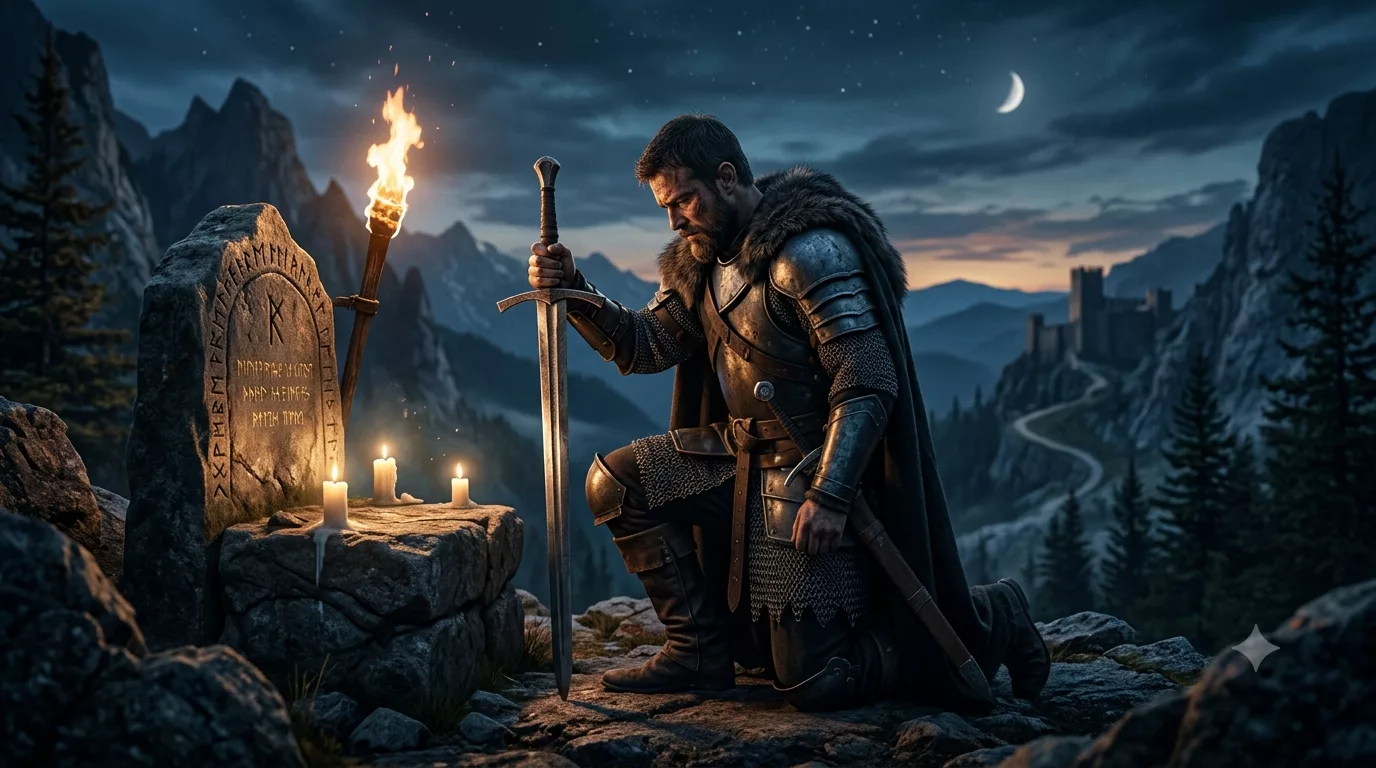
Long before a warrior stepped onto a battlefield, before an athlete entered competition, or before a craftsman began his life’s work, there was a commitment. That commitment was often expressed through an oath—a declaration of identity and purpose. An oath was more than a promise. It was a guide for behavior when emotions changed, circumstances became difficult, or fear tempted a person to abandon the path.
Retirement is no different.
Many men spend forty or fifty years living according to responsibilities imposed by others. Employers establish schedules. Families create obligations. Bills demand discipline. Deadlines require action. Whether they enjoy every moment or not, structure surrounds them.
Then retirement arrives.
For the first time in decades, the structure disappears. No alarm clock demands attention. No supervisor evaluates performance. No coworkers expect participation. Freedom suddenly becomes abundant.
Yet freedom without direction often produces drift instead of fulfillment.
Many retired men wake each morning asking a question they never expected to ask:
“What am I supposed to do today?”
That question is not about scheduling. It is about identity.
The greatest challenge of retirement is not having enough time. It is deciding who you will become when no one else is telling you who you should be.
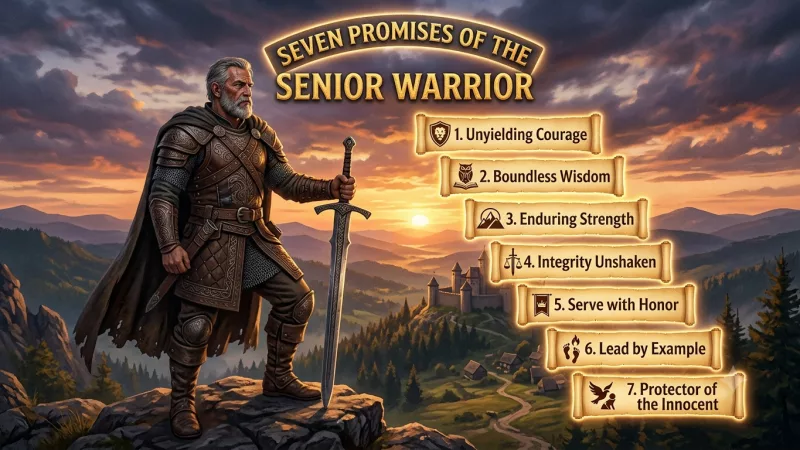
This is why every Senior Warrior needs an oath.
An oath is not merely a collection of inspiring words. It is a declaration of the man you intend to become regardless of your age, your health, your finances, or your circumstances. It reminds you that your character remains under your control even when many other parts of life are not.
The world changes. Your oath does not.
Successful men understand a truth that many people overlook: identity comes before habits.
People often believe that lasting change begins with finding the perfect exercise program, the ideal diet, or the latest productivity system. Those tools have value, but they rarely last if they are disconnected from identity.
A man who believes, “I am becoming a disciplined man,” naturally begins making disciplined decisions.
A man who believes, “I am responsible for my own future,” approaches every day differently than one who waits for motivation to arrive.
Identity quietly shapes behavior.
This idea has existed for centuries. The Stoic philosophers taught that while we cannot control external events, we always retain authority over our own character and choices. Life will present illness, disappointment, aging, financial uncertainty, and unexpected loss. Those realities cannot always be prevented. What remains entirely yours is the decision about how you will respond.
The Stoics understood that inner discipline creates outer stability. They trained themselves to act according to reason and virtue rather than emotion. Their strength came from mastering themselves before attempting to master anything else.
Bruce Lee expressed the same principle in modern language.
Although famous as a martial artist, Bruce Lee constantly emphasized self-mastery over defeating opponents. He believed that the greatest battle was within ourselves.
He encouraged students to remove what was unnecessary, remain adaptable, and continually refine their character. His famous advice to “be like water” was not merely about fighting. It described a way of living—remaining flexible without surrendering one’s principles.
Water changes shape without losing its nature.
The Senior Warrior must do the same.
Retirement demands flexibility. Bodies age. Circumstances change. Friends move away. Income may decrease. Health challenges may appear unexpectedly. Yet none of these events requires surrendering integrity, discipline, or purpose.
Principles provide stability when circumstances do not.
That is why principles create consistency.
Motivation rises and falls like the weather. Some mornings you feel energetic. Other mornings you do not. If your life depends on feeling motivated, your progress will always be unpredictable.
Principles eliminate the need to negotiate with yourself.
You exercise because you are a man who protects his health.
You read because you are committed to lifelong growth.
You save money because you value independence.
You treat others with respect because that reflects your character, not because they deserve it.
Your actions become expressions of your identity instead of reactions to your emotions.
Many people misunderstand discipline. They imagine discipline as restriction, sacrifice, or punishment. In reality, discipline creates freedom.
The disciplined man enjoys greater freedom because he maintains his health longer. He preserves financial independence by spending wisely. He develops stronger friendships because he keeps his commitments. He experiences greater peace because he lives according to values instead of impulses.
Every act of discipline today expands tomorrow’s possibilities.
This is especially true for men entering the later chapters of life.
The Senior Warrior does not seek discipline to impress others. He seeks discipline because it allows him to remain capable, useful, and independent for as many years as possible. His greatest victory is not over another man but over complacency, excuses, and aimlessness.
Today marks the beginning of that commitment.
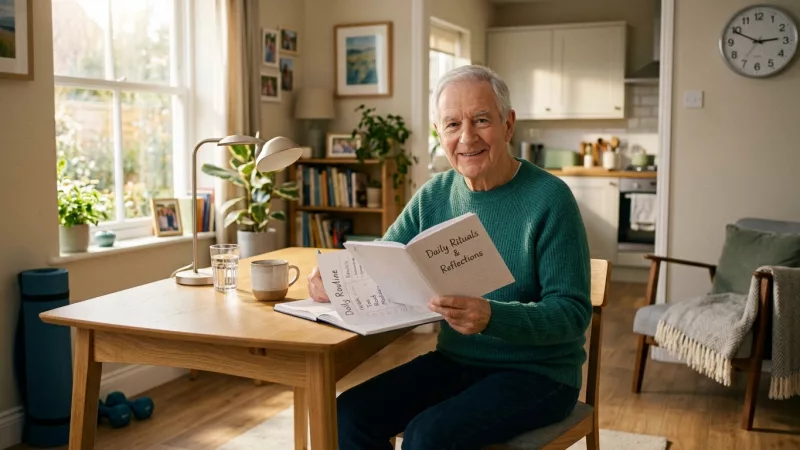
Take a sheet of paper or open a notebook. Without worrying about perfect wording, write the first draft of your own Senior Warrior Oath. Keep it simple. Describe the kind of man you choose to become and the principles that will guide your life each day.
Your oath will evolve as you grow. It is not carved in stone. It is refined through experience, tested by adversity, and strengthened by faithful practice.
The important step is to begin.
A warrior without an oath drifts wherever life carries him.
A Senior Warrior with an oath chooses his direction every single day.