Why America Doesn’t Need New Leaders
Why America Doesn’t Need New Leaders — It Needs Stronger Citizens


Every election cycle, Americans hear the same promise:
We just need better leaders.
A new president.
A new Congress.
A new political movement.
But history—and philosophy—suggests something deeper.
A society does not become strong because it elects great leaders.
It elects great leaders because the citizens themselves are strong.
This is an old idea, deeply rooted in Stoic philosophy and the civic traditions of the early republic.
Before a nation can produce wise leadership, it must first produce disciplined citizens.
And that is where the modern crisis truly lies.
The Problem Isn’t Leadership — It’s Character
Public debate today often feels shallow and chaotic.
Arguments are replaced by slogans.
Discussion becomes emotional combat.
People repeat phrases they have heard without examining whether they are true.
This is not simply a political problem.
It is a character problem.
The Stoic philosopher Epictetus warned about this nearly two thousand years ago. He believed that most people live on borrowed opinions rather than examined beliefs.
In other words, they do not truly think.
They react.
A civilization built on reaction instead of reflection will always struggle to produce wise leadership.
We see this today with Left “woke” protesters opposing every Trump action, and supporting illegal criminal aliens over U.S. citizens.
Trump is far from perfect, but not every action can be wrong.
The Stoic View of Citizenship
For the Stoics, leadership was never the starting point.
It was the result.
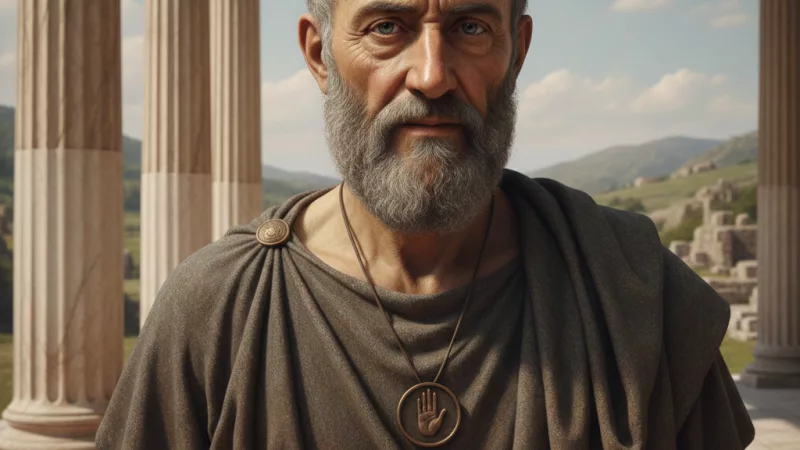
The Roman emperor and philosopher Marcus Aurelius believed that a good society depended on the daily conduct of ordinary people.
A citizen’s responsibilities included:
- thinking clearly
- acting with self-discipline
- seeking truth instead of comfort
- practicing fairness and restraint
These qualities were called virtues.
Without virtue in citizens, no political system—no matter how cleverly designed—can remain healthy for long.
Why Societies Drift into Disorder
Civilizations rarely collapse overnight.
More often, they slowly lose the habits that once made them strong.
Citizens become:
- intellectually lazy
- emotionally reactive
- dependent on authority for answers
- unwilling to question popular ideas
In that environment, political discourse becomes louder but less thoughtful.
And eventually, people begin searching desperately for strong leaders to fix everything.
But no leader can compensate for a population that has abandoned self-discipline.
The Senior Warrior Philosopher Perspective
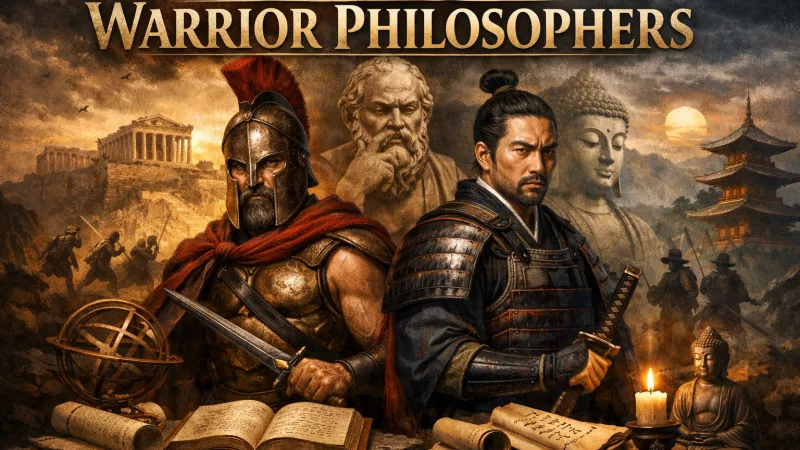
This is where the idea of the Senior Warrior Philosopher becomes important.
A warrior philosopher is not someone obsessed with politics.
It is someone committed to personal mastery.
Especially later in life, we have a unique opportunity to model something society desperately needs:
calm strength.
Instead of reacting to every headline, a Senior Warrior Philosopher focuses on:
- strengthening the body
- sharpening the mind
- controlling emotional reactions
- thinking independently
In doing so, they become something rare in modern culture:
a stable person in an unstable age.
And stability spreads.
People around calm, disciplined individuals tend to become calmer and more thoughtful themselves.
Leadership Emerges From Character
History offers countless examples of this pattern.
When citizens are courageous and principled, strong leaders emerge naturally.
When citizens become fearful and reactive, opportunists rise instead.
The quality of leadership in any society is often a mirror reflecting the inner condition of its people.
That is why ancient philosophers focused so heavily on personal conduct.
They understood something modern political debates often forget:
The health of a republic begins inside the individual.
A Practical Path Forward
The solution to national confusion does not start in Washington.
It begins in ordinary life.
A Senior Warrior Philosopher follows simple disciplines:
Think before reacting.
Do not repeat ideas until you have examined them.
Control emotional impulses.
Anger and outrage rarely produce wisdom.
Seek truth, not tribe.
Truth does not belong to political factions.
Strengthen yourself daily.
Physical health, mental clarity, and emotional balance are civic virtues.
Lead quietly by example.
The most powerful influence is often silent.
These practices may seem small.
But cultures change when individuals change.
The Stoic Reminder
Marcus Aurelius left behind a short instruction to himself that still resonates today:
“Waste no more time arguing what a good man should be. Be one.”
That advice applies not only to individuals but to societies.
A republic does not need millions of people arguing about virtue.
It needs millions of people practicing it.
The Real Renewal
America does not necessarily need a new class of leaders.
It needs something more fundamental:
a renewed class of citizens.
People who are calm instead of reactive.
Thoughtful instead of tribal.
Disciplined instead of distracted.
In other words, it needs more individuals willing to live as warrior philosophers in everyday life.
And that transformation can begin anywhere.
Even with one person.
Even today.