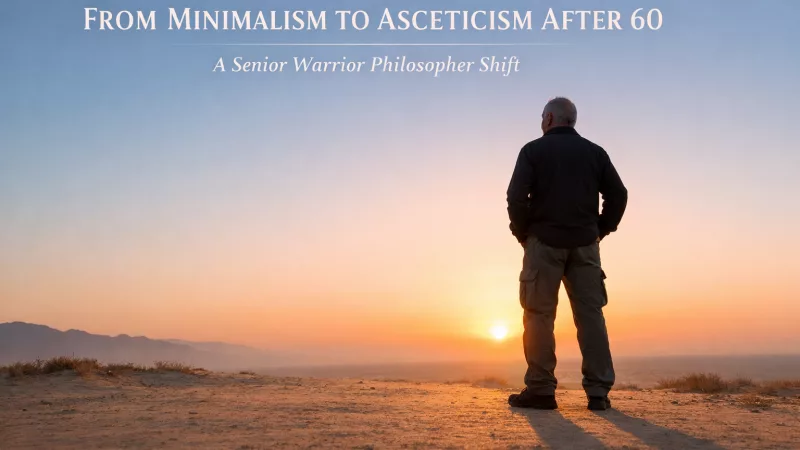
The Power of Living Alone—If You Let It Be
The Power of Living Alone—If You Let It Be
Phoenix72
Living alone is often framed as a problem.
Friends worry. Family checks in. Headlines warn about loneliness, isolation, and decline. Whole industries exist to help people “cope” with being by themselves—as if solitude were a defect.
But living alone is not automatically a weakness.
It can be a quiet power—if you let it be.
Alone Is Not the Same as Abandoned
Many people over 60 live alone not because they planned to, but because life rearranged itself.
A spouse died.
A marriage ended.
Children moved away.
Health changed.
Money narrowed.
It’s easy to read this as a verdict: Something went wrong.
But living alone isn’t a judgment. It’s a condition—and conditions can be shaped.
Being alone simply means you’re not sharing your space by default. What that space becomes is still up to you.
The Gift of an Unedited Life
When you live with others, your days are negotiated.
Noise levels.
Meal times.
Television choices.
Emotional weather.
Expectations.
Living alone removes much of that friction.
You wake when you wake.
You eat what you eat.
You move at your own pace.
You arrange your space for function, not appearance.
There’s no audience. No performance. No need to explain yourself.
At first, this can feel uncomfortable. Without constant feedback, you may wonder who you are now.
But that quiet isn’t emptiness.
It’s information.
Living alone shows you:
- What truly tires you
- What genuinely comforts you
- What matters when no one is watching
Those discoveries aren’t small. They’re foundational.
Loneliness vs. Solitude
Loneliness hurts. Solitude can nourish.
The difference is agency.
Loneliness says, I am cut off.
Solitude says, I am here.
You can feel lonely in a crowded house.
You can feel deeply at peace in a small, quiet apartment.
Living alone gives you access to solitude—but it doesn’t guarantee it. Solitude must be chosen, not endured.
When you stop escaping silence, something shifts. You become less reactive. You listen better—to yourself and to life as it is.
That skill matters more as we age.
Reclaiming Inner Authority
Live alone long enough and something subtle happens.
You stop asking for permission.
Not from others—from old versions of yourself.
You stop:
- Apologizing for resting
- Explaining simple choices
- Justifying how you spend your time
- Waiting for the “right” mood
You begin to trust your own rhythms.
This isn’t selfishness.
It’s maturity.
Living alone restores inner authority—the quiet confidence that you can steer your life, even in small ways.
The Discipline of Self-Companionship
Living alone teaches a discipline many people never develop: being with yourself without distraction.
No one manages your mood.
No one structures your day.
No one fills the silence.
It’s tempting to drown that out with noise—TV, news, scrolling.
But when you let some quiet remain, you become your own witness.
You notice what you actually need.
You treat yourself with more patience.
You rely less on external validation.
That relationship—with yourself—becomes the most stable one you have.
Designing a Life That Fits
Living alone allows precision.
You can design a life that fits your energy, health, and finances—not the life you’re “supposed” to have.
That might mean:
- Fewer possessions
- Simpler meals
- Earlier nights
- Smaller social circles
- More walking
- Quieter mornings
This isn’t deprivation. It’s alignment.
A life that fits requires less effort. Less effort leaves more strength for what matters.
When Living Alone Feels Heavy
Some days, living alone is hard.
Illness. Fatigue. Bad news. Long evenings.
The goal isn’t to pretend otherwise.
The goal is to remember this: difficulty does not cancel dignity.
On hard days:
- Simplify
- Reduce decisions
- Reach out briefly if needed
- Rest without judgment
Living alone doesn’t mean doing everything alone. It means choosing help deliberately.
A Quiet Advantage
Many people never get the chance to know themselves outside of roles, demands, and noise.
Living alone gives you that chance.
Not to reinvent yourself overnight.
Not to prove anything.
But to live deliberately.
To simplify.
To listen.
To begin again—on your own terms.
If you let it be, living alone becomes not a deficit, but an advantage.
Reflection
Take a moment and ask:
- What parts of living alone quietly support me?
- Where do I still treat solitude as something to escape?
- What does my space say about the life I’m living now?
Write honestly. No fixing required.
One Small Habit
The Evening Check-In
Each evening, ask one question:
What helped me today?
Not what you accomplished.
Not what went wrong.
Just what helped.
Awareness builds strength—and strength compounds quietly.
If you want, I can add Phoenix72 internal links, create a Substack/newsletter cut, or design a Pinterest tall pin to match this post’s theme.