The Holodomor
The Holomodor: A Hard Lesson in Freedom, Control, and Human Resilience
What the Holodomor Was
The Holodomor was a forced famine engineered by Joseph Stalin’s Soviet government. It wasn’t caused by drought or crop failure. It was caused by deliberate political decisions—decisions that stripped Ukrainian families of their food, land, freedom, and dignity.
Between 3 and 7 million people died in less than two years.
The word Holodomor comes from Ukrainian words meaning “hunger” and “to kill.” And that is exactly what happened.
Why It Happened
The Soviet Union wanted total control over farming. Stalin forced all private farmers into huge state-run collective farms.
Ukrainian farmers resisted more than most—and the government punished that resistance with devastating force.
Here are the major causes, simplified:
1. Forced Collectivization
Farmers lost their land, livestock, tools, and freedom to choose how to work. Everything belonged to the state.
2. Impossible Grain Quotas
The government demanded far more grain than the farms could produce. When quotas weren’t met, officials seized all food—including seed grain needed for planting the next harvest.
3. Travel Bans
Starving Ukrainians were blocked from leaving their villages to search for food. Trains, roads, and borders were sealed.
4. Criminalizing Survival
A 1932 Soviet law made it illegal to take even a few leftover stalks of wheat. People were sent to prison—or worse—for trying to avoid starvation.
5. A Massive Cover-Up
Officials banned the word “famine.” Journalists were threatened. Records were destroyed. For decades, the world barely knew what happened.
This was no accident. It was a policy.
Why Ukraine Was Targeted
Ukraine was culturally strong, fiercely independent, and proud of its identity. For Stalin, that was dangerous.
He feared:
- A strong Ukrainian national spirit
- Resistance to Soviet rule
- The possibility of independence movements
The goal was simple: break a nation’s will by breaking its people.
Many modern historians and governments recognize the Holodomor as a genocide—a deliberate attempt to destroy a national group.
What Life Was Like During the Famine
Imagine living in a village where:
- Food is gone
- Children cry from hunger
- Everyone is weak
- Leaving is illegal
- Asking for help is punished
- Soldiers take whatever is left in your home
There are stories of entire families dying together because no one had the strength to bury anyone else. Some villages were nearly wiped off the map.
This wasn’t a famine of nature. It was a famine of oppression.
How Many Died?
Estimates vary because the Soviet Union hid the truth, but most historians agree on 3 to 7 million deaths. Some Ukrainian researchers believe the number is even higher.
Regardless of the exact count, the scale of suffering is beyond imagination.
Why We Still Talk About the Holodomor Today
For seniors who’ve lived through tough decades, the Holodomor teaches lessons that still matter:
1. Freedom Is Fragile
When a government controls food, movement, and information, ordinary people pay the price.
2. Truth Can Be Silenced
Media censorship and propaganda kept the world in the dark for decades. Many survivors were afraid to speak until late in life.
3. Identity Matters
Ukraine’s language, culture, and independence were seen as threats. To destroy a people, you attack their identity first.
4. Human Resilience Is Real
Despite everything, Ukraine survived. Its culture survived. Its spirit survived. And today, Ukrainians around the world honor the memory of those who perished.
For anyone rebuilding life at 60, 70, or 80, this resilience is a powerful reminder: the human spirit can rise again.
Holodomor Remembrance Today
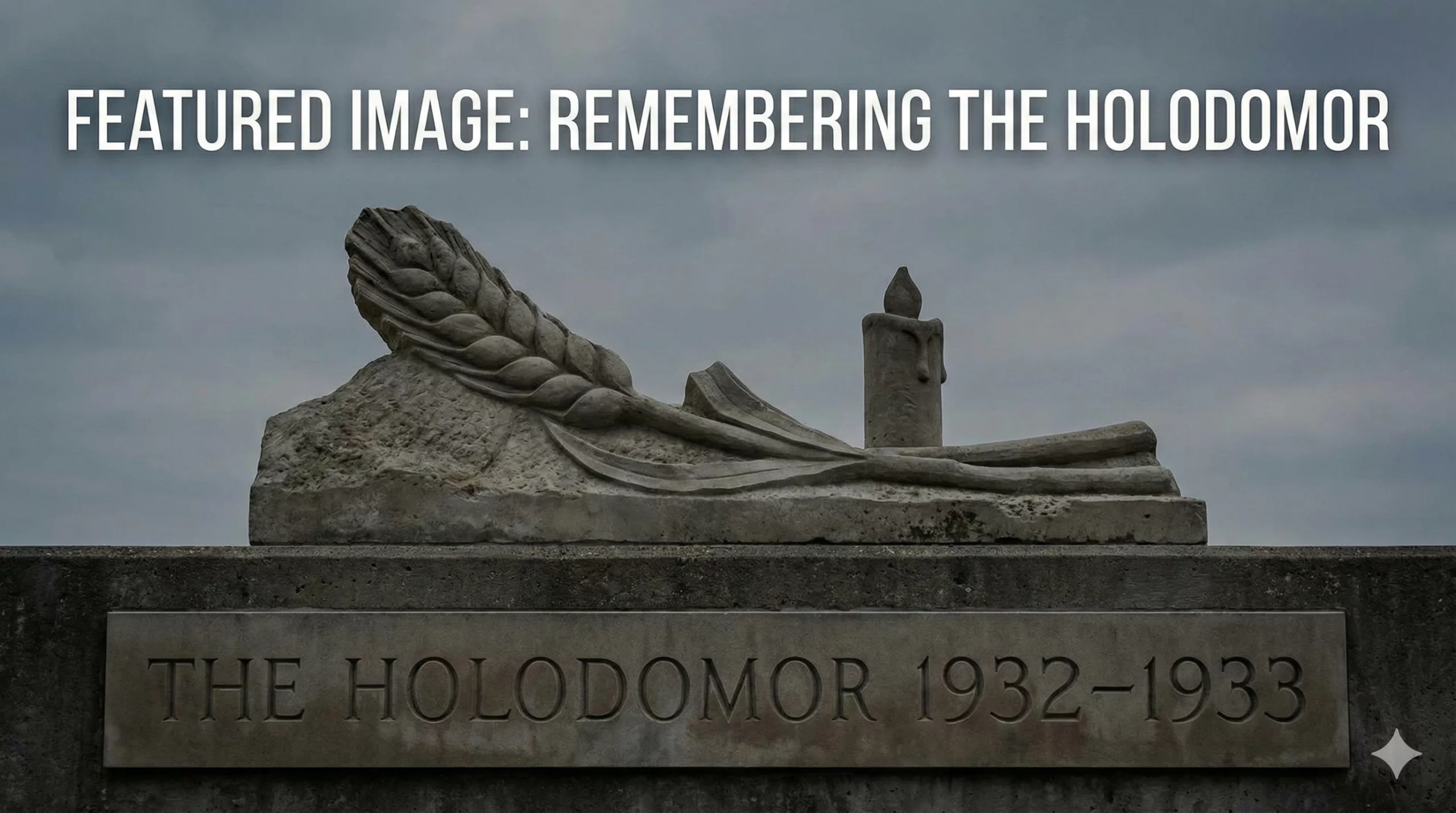
The fourth Saturday of November is Holodomor Remembrance Day. Ukrainians light candles in their windows to honor the millions who died.
It’s a moment to reflect on:
- The cost of political extremism
- The importance of personal dignity
- The value of truth
- The need for compassion
Reflection Questions
- What lessons from the Holodomor feel most relevant to your own life today—freedom, resilience, identity, or the importance of truth?
- How can we honor past suffering by living with more awareness and gratitude in our daily routines?
- What small actions can help you strengthen your own independence—physically, mentally, or financially?