The History of Zionism
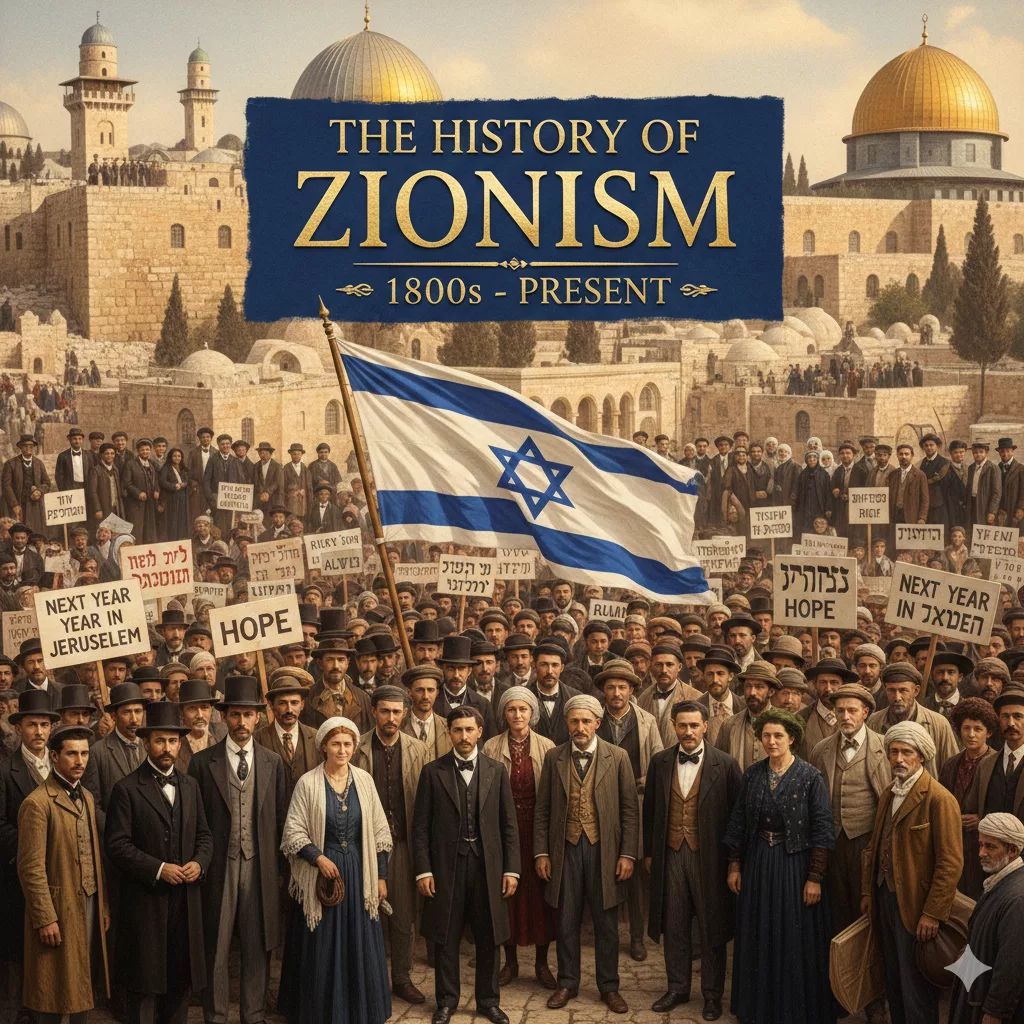
The History of Zionism

Zionism is a political and nationalist movement that began in the late 19th century. Its central idea: the Jewish people are a nation and have the right to a homeland in the historic Land of Israel (also called Zion, a biblical term referring to Jerusalem and the broader land).
Below is a clear, chronological overview.
1. Ancient Roots: Religious and Cultural Longing
For thousands of years, Jewish identity has been tied to the Land of Israel.
- Ancient Israelite kingdoms existed in the region (roughly 1000–586 BCE).
- After the Roman destruction of Jerusalem in 70 CE and later revolts, many Jews were dispersed across Europe, North Africa, and the Middle East.
- Despite dispersion (the Diaspora), Jewish prayers, rituals, and texts preserved a longing for return to Zion.
For centuries, this longing was primarily religious and spiritual, not political.
2. 19th-Century Europe: From Religious Hope to Political Movement
Modern Zionism emerged in the late 1800s in Europe.
Why then?
- Rising European nationalism (Italians, Germans, Greeks seeking nation-states).
- Persistent antisemitism, especially in Eastern Europe and the Russian Empire.
- The shock of events like the Dreyfus Affair in France (1894), where a Jewish officer was falsely accused of treason.
One key figure:
- Theodor Herzl – an Austrian journalist who argued that Jews needed a sovereign state for safety and dignity.
In 1897, Herzl organized the First Zionist Congress in Basel, Switzerland. The movement formally adopted the goal of establishing a Jewish homeland in Palestine (then part of the Ottoman Empire).
This marked the birth of political Zionism.
3. Early Immigration (Aliyah)
Starting in the late 19th century:
- Jewish immigrants (mostly from Eastern Europe and Russia) began moving to Ottoman Palestine.
- They established agricultural settlements and small communities.
- Some were secular socialists; others were religious pioneers.
These migration waves are called aliyot (plural of aliyah, meaning “ascent”).
4. World War I and the British Mandate
In 1917, during World War I:
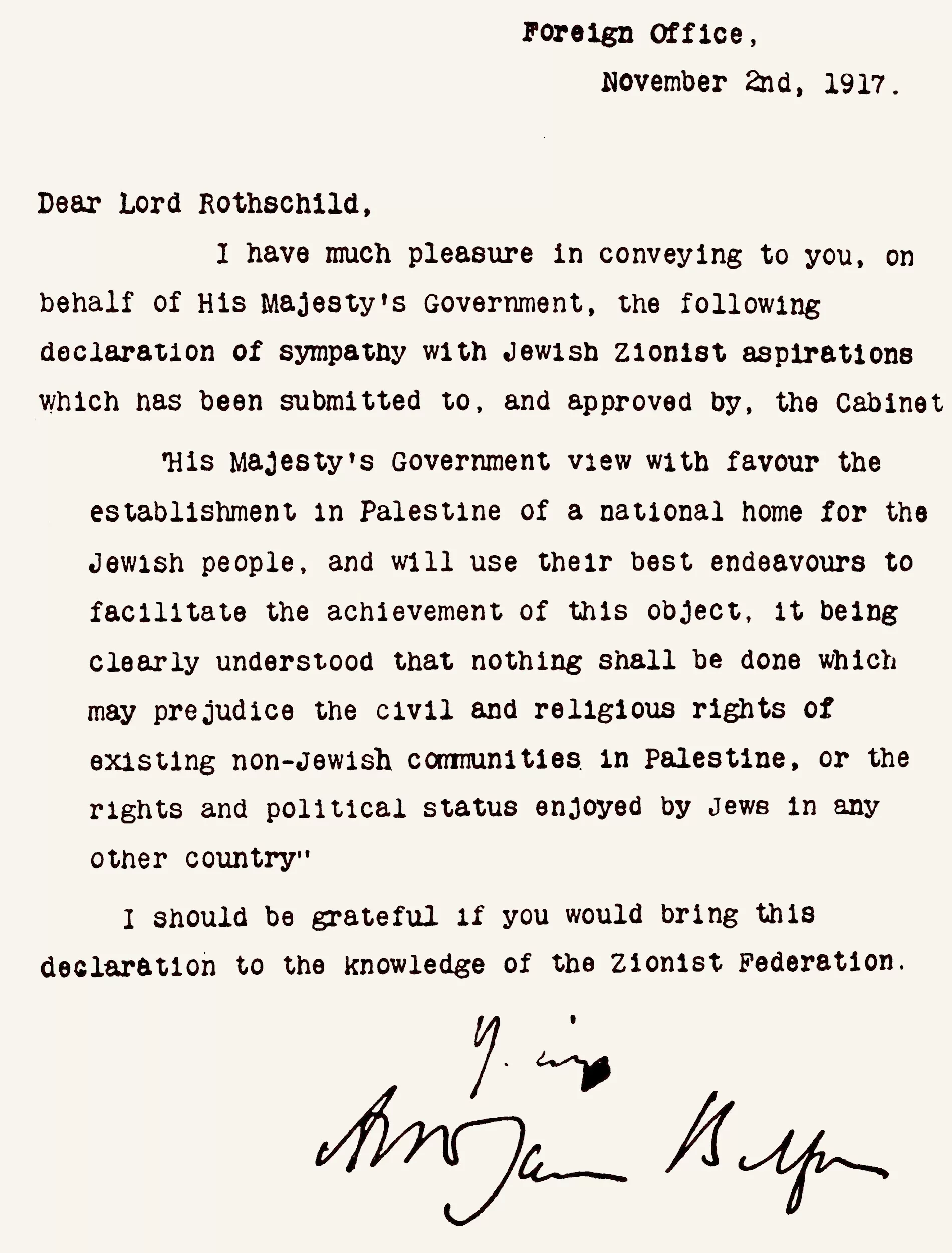
- Britain issued the Balfour Declaration, expressing support for “the establishment in Palestine of a national home for the Jewish people,” while also stating that the civil and religious rights of non-Jewish communities should not be harmed.
After the war:
- The Ottoman Empire collapsed.
- Britain gained control of Palestine under a League of Nations mandate (1920–1948).
Tensions grew between:
- Jewish immigrants building institutions and defense organizations.
- The Arab population (Muslim and Christian Palestinians), who opposed mass Jewish immigration and feared displacement.
Violence and uprisings occurred in the 1920s and 1930s.
5. The Holocaust and the Push for Statehood
During World War II:
- Nazi Germany murdered six million Jews in the Holocaust.
- After the war, many survivors sought refuge, but immigration limits to Palestine were still in place.
Global sympathy for Jewish survivors increased support for a Jewish state.
In 1947:
- The United Nations proposed partitioning Palestine into separate Jewish and Arab states.
In 1948:
- The State of Israel was declared.
- Neighboring Arab states invaded.
- The 1948 Arab–Israeli War followed.
Israel survived and expanded beyond the original UN partition borders. Many Palestinians fled or were expelled during the war—an event Palestinians call the Nakba (“catastrophe”).
6. Post-1948: Zionism and the Israeli State
After Israel’s creation:
- Zionism shifted from building a state to strengthening and defending it.
- Jews from Europe, the Middle East, and North Africa immigrated to Israel.
- In 1967, Israel captured the West Bank, Gaza Strip, East Jerusalem, Sinai, and Golan Heights during the Six-Day War.
From this point onward, debates intensified:
- Some Zionists supported settlement in these territories.
- Others favored land-for-peace solutions.
Zionism diversified into different strands:
- Labor Zionism (socialist roots)
- Revisionist Zionism (more nationalist)
- Religious Zionism
- Cultural Zionism
7. Zionism Today
Today, Zionism generally means support for the continued existence and security of the State of Israel as a Jewish homeland.
However:
- Some critics argue Zionism led to Palestinian displacement and ongoing conflict.
- Some Jewish groups support Israel but criticize specific policies.
- A small number of Jewish religious groups oppose Zionism on theological grounds.
The term itself can carry different meanings depending on who is using it.
In Summary
Zionism began as a 19th-century nationalist movement shaped by:
- Jewish historical connection to the land
- European nationalism
- Antisemitism
- The trauma of the Holocaust
It led directly to the founding of Israel in 1948 and remains central to Middle Eastern politics and global debate today.
Christian Zionism
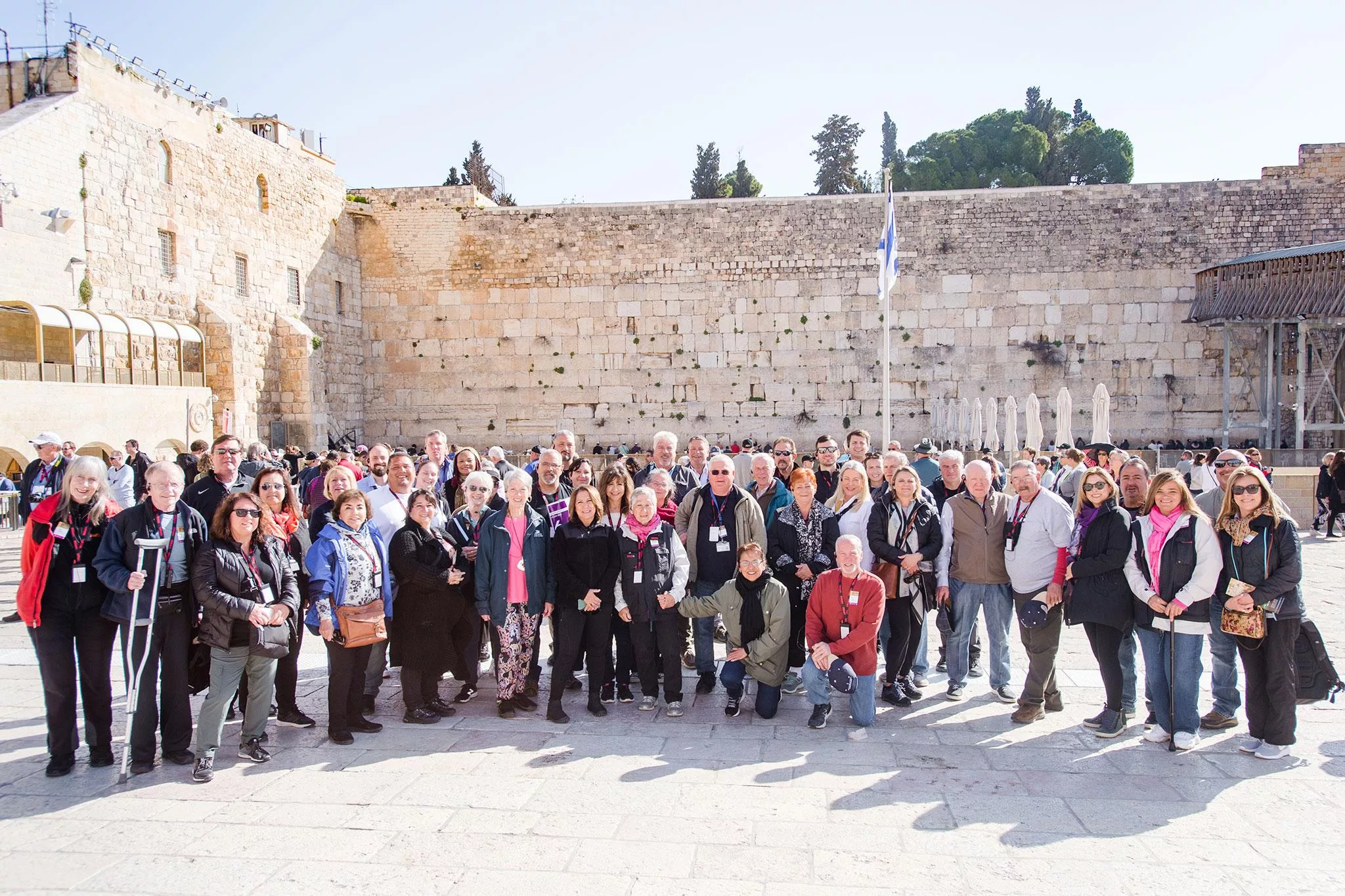
Christian Zionism is a movement among Christians who support the establishment and continued existence of the State of Israel, often for theological (biblical) reasons rather than ethnic or national identity.
It overlaps with political Zionism in supporting Israel, but its motivations are distinctly Christian.
1. The Theological Roots
Christian Zionism is rooted in certain interpretations of the Bible—especially prophetic texts.
Key ideas often include:
- God’s covenant with Abraham (Genesis 12:1–3) still applies to the Jewish people.
- The Jewish return to the Land of Israel fulfills biblical prophecy.
- Events in Israel are connected to end-times prophecy.
A major theological framework behind modern Christian Zionism is Dispensationalism, popularized in the 19th century by:
- John Nelson Darby
This theology sharply distinguishes between:
- God’s plan for Israel (the Jewish people)
- God’s plan for the Church (Christians)
It teaches that the Jewish people must return to their land as part of God’s prophetic timeline.
2. 19th-Century Protestant Restorationism
Before modern Jewish political Zionism, some Protestant Christians in Britain and America already advocated for a Jewish restoration to Palestine.
British Protestant leaders influenced foreign policy thinking in the 1800s. Some historians argue this atmosphere helped shape British support for the Balfour Declaration.
So interestingly:
In some cases, Christian Zionism preceded Jewish political Zionism in organized political advocacy.
3. 20th Century: Rise in the United States
Christian Zionism grew dramatically in the U.S., especially after:
- The founding of Israel in 1948
- Israel’s victory in the 1967 Six-Day War
Many evangelicals saw these events as fulfillment of prophecy.
One major modern figure:
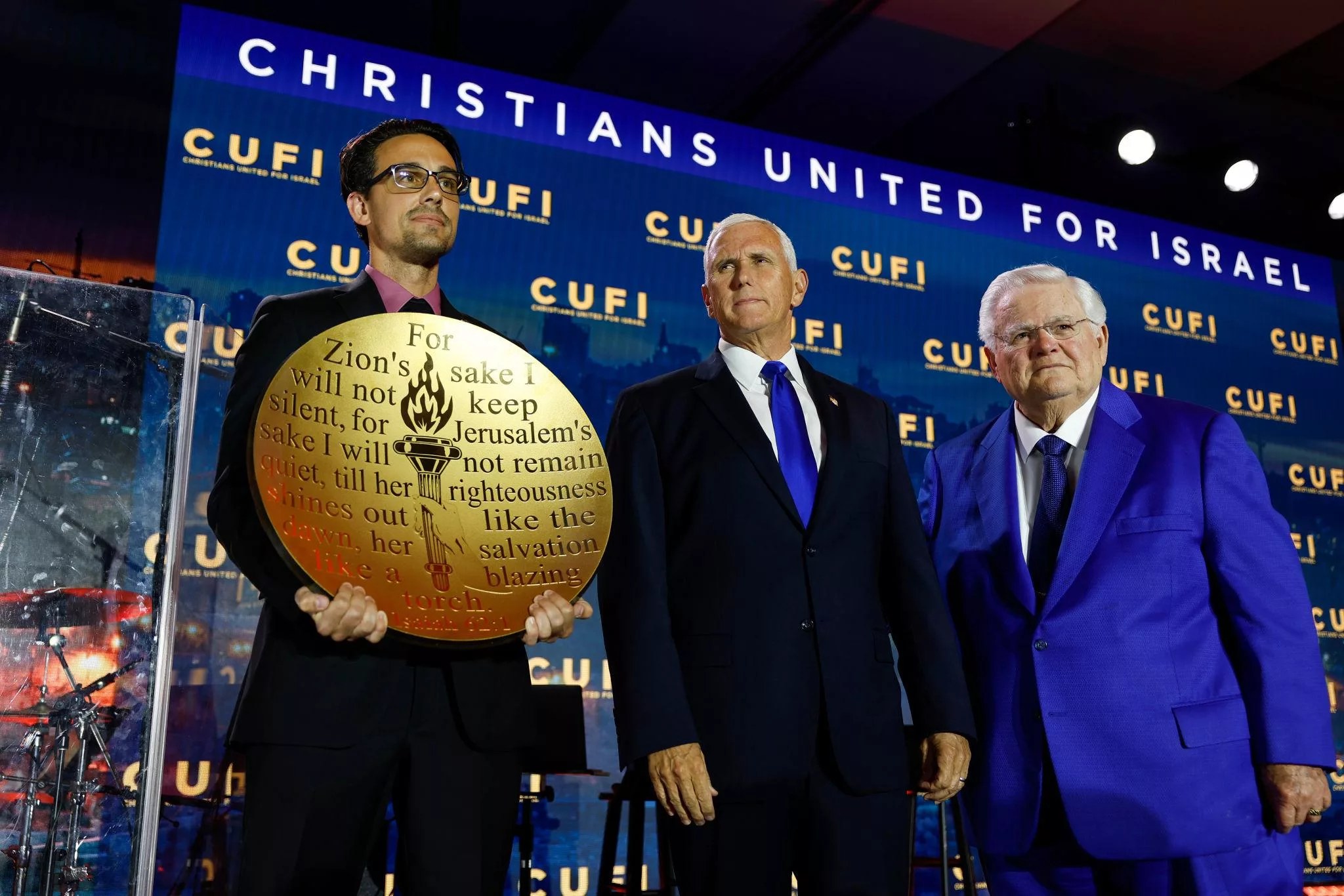
- John Hagee, founder of
- Christians United for Israel
This organization has become one of the most influential pro-Israel lobbying groups in the United States.
4. Core Beliefs (Varies by Group)
Not all Christian Zionists believe the same things, but common themes include:
1. Biblical Covenant
The land was promised by God to the descendants of Abraham through Isaac and Jacob.
2. Prophetic Fulfillment
The modern state of Israel is seen as part of God’s unfolding prophetic plan.
3. Blessing Principle
Genesis 12:3 (“I will bless those who bless you”) is often interpreted to mean that nations should support Israel to receive divine blessing.
4. Opposition to Dividing the Land
Some Christian Zionists oppose territorial concessions (like dividing Jerusalem or creating a Palestinian state) for theological reasons.
5. Political Influence
In the U.S., Christian Zionism has had significant political impact:
- Strong support within segments of the evangelical voting base.
- Influence on U.S. foreign policy debates.
- Support for recognizing Jerusalem as Israel’s capital (which the U.S. did in 2017).
However, Christian Zionism is not uniform:
- Some evangelicals support Israel but also support a two-state solution.
- Some mainline Protestant denominations are more critical of Israeli policies.
6. Jewish Views of Christian Zionism
Jewish responses are mixed.
Some Israeli leaders and Jewish organizations welcome Christian Zionist support, especially political and financial backing.
Others are cautious because:
- Some Christian Zionist theology includes end-times scenarios involving Jewish conversion to Christianity.
- The support may be seen as conditional or prophecy-driven rather than purely political.
7. Criticism of Christian Zionism
Critics argue:
- It can oversimplify complex political realities.
- It may prioritize prophecy interpretation over peacemaking.
- It can ignore Palestinian Christian communities.
Some Christian theologians argue that the New Testament redefines “Israel” spiritually rather than politically.
8. Key Distinction
It’s important to separate:
- Jewish Zionism → A Jewish nationalist movement for self-determination.
- Christian Zionism → A Christian theological and political movement supporting Israel.
They overlap in support for Israel but arise from different identities and motivations.
In Summary
Christian Zionism:
- Began in 19th-century Protestant theology.
- Expanded significantly in American evangelical circles.
- Connects biblical prophecy with modern Israel.
- Plays a meaningful role in U.S. politics today.
It remains one of the most influential religious-political movements in modern geopolitics.