Reject What Weakens You
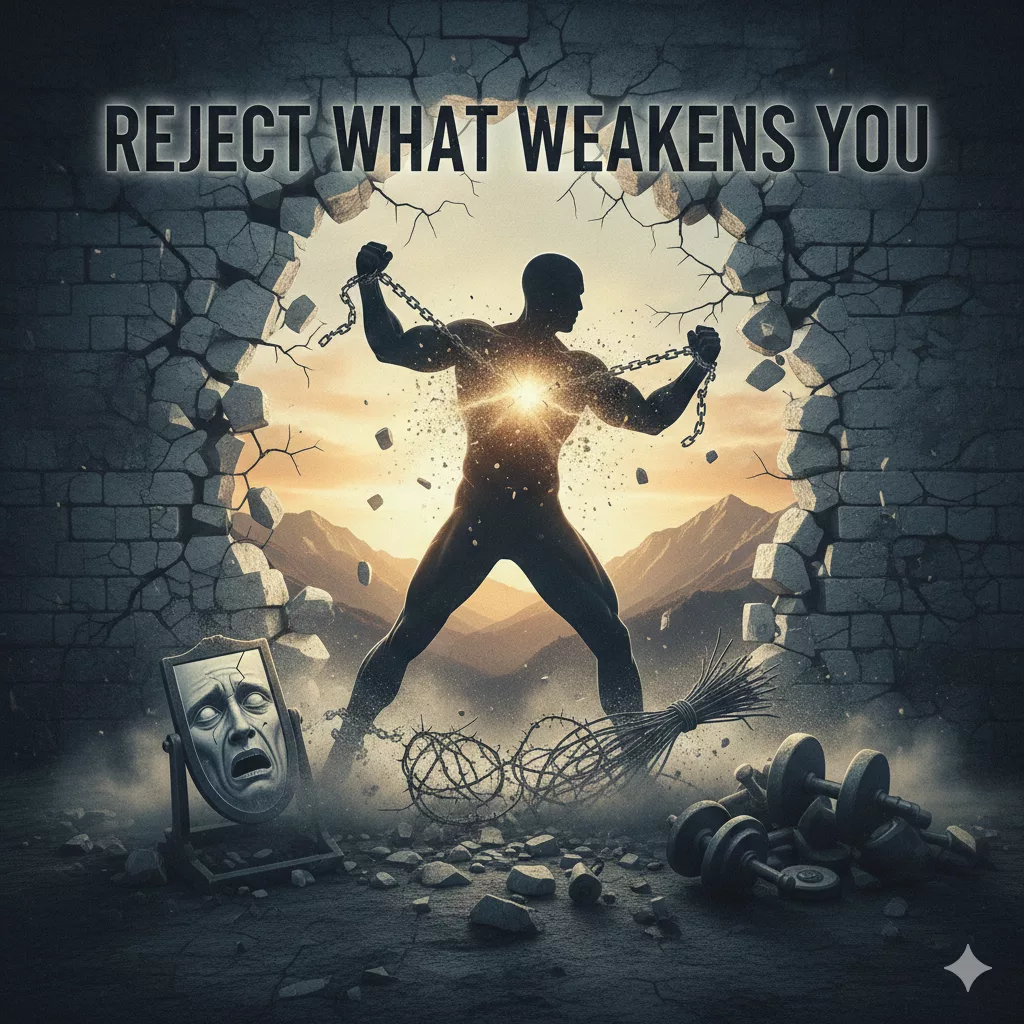
Reject What Weakens You
“It’s not the daily increase but daily decrease. Hack away at the unessential.” — Bruce Lee
This insight cuts against nearly everything modern culture teaches—especially about aging.
We are told to add: more routines, more supplements, more obligations, more stimulation, more noise. When strength fades or energy dips, the instinct is to compensate by piling on effort. Try harder. Push more. Stay busy. Stay relevant.
But this approach quietly accelerates exhaustion.
Bruce Lee understood something timeless: real power emerges through subtraction. Not laziness. Not neglect. Precision. The removal of what does not serve the essential.
For seniors, this principle is not optional—it is strategic.
Strength After 60 Is an Energy Economy
In youth, energy feels abundant and forgiving. You can waste it and still recover. In later life, energy becomes valuable, finite, and revealing. It exposes inefficiencies quickly.
This is not decline. It is feedback.
Every unnecessary habit, every draining obligation, every low-quality input now carries a visible cost. Brain fog lingers longer. Recovery slows. Focus fragments more easily.
The mistake is interpreting this as weakness.
The wiser interpretation is refinement.
You are being invited—not forced—to live with greater intentionality.
What Weakens You Is Often Invisible
Weakening forces rarely announce themselves. They disguise themselves as “normal” routines:
- Consuming information you can’t act on
- Eating foods that spike then crash your energy
- Engaging in conversations that leave you tense or diminished
- Keeping commitments that no longer align with your values
- Carrying clutter—physical, emotional, or mental—out of habit
None of these seem dramatic. That’s why they’re dangerous.
Weakness is cumulative. It is the slow drain, not the sudden loss.
Bruce Lee’s directive—hack away at the unessential—is not about becoming extreme. It is about becoming honest.
Ask a simple question:
Does this strengthen me—or quietly weaken me?
If the answer is unclear, pay attention to how you feel afterward. The body is an accurate accountant.
Minimalism as Strength, Not Aesthetic
Senior minimalism is often misunderstood as deprivation or downsizing for its own sake. In truth, it is about energy preservation and clarity.
Minimalism is not having less.
Minimalism is needing less to function well.
When you remove what drains you, strength returns without effort. Focus sharpens. Recovery improves. Mood stabilizes. Decision-making becomes cleaner.
You are no longer fighting friction.
This is why subtraction feels liberating rather than restrictive—when done correctly.
Letting Go Is an Act of Authority
There is a subtle but powerful shift that occurs when you consciously remove something unessential.
You reclaim authorship.
You stop reacting and start choosing.
This matters deeply in later life, where autonomy is often threatened—not by incapacity, but by assumption. Assumption that you should settle, slow down, or surrender preferences “for safety.”
True safety does not come from shrinking your life. It comes from strengthening your discernment.
Every habit you remove by choice reinforces a simple truth:
You are still in command.
The Senior Warrior’s Edge
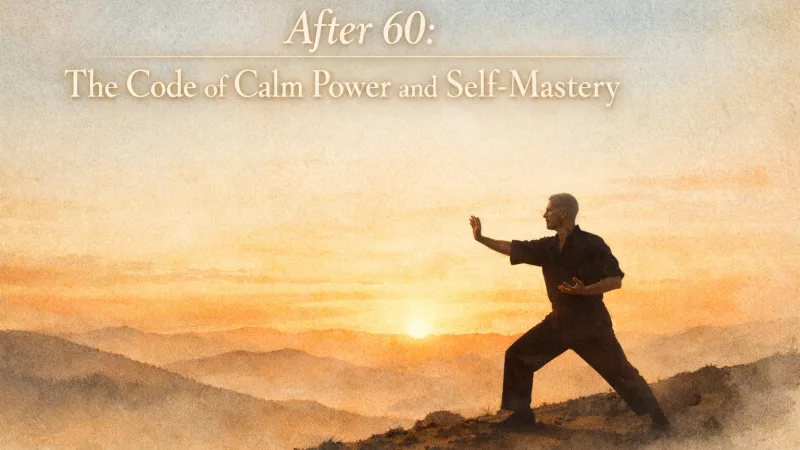
The senior warrior philosopher does not chase intensity. He protects clarity.
He understands that strength is not proven by accumulation but by precision. By knowing what to ignore. By refusing to carry what does not earn its place.
Daily decrease is not loss.
It is liberation.
Hack away at the unessential, and what remains will surprise you:
Calm strength. Stable energy. Quiet confidence.
Not because you added something new—
but because you finally stopped feeding what weakened you.