Ikigai and Oaths
Ikigai and Oaths
An oath is a deliberate promise made to yourself, to others, or to a higher principle.
It is not just a goal or a wish.
It is a declaration of identity.
Throughout history, warriors, monks, physicians, judges, soldiers, and craftsmen used oaths to guide their behavior when emotions, fear, fatigue, or temptation tried to pull them away from their values.
An oath answers a powerful question:
“Who will I choose to be when life becomes difficult?”
For a senior man or grandfather, an oath can become a stabilizing force.
Later life often removes old identities:
- career titles
- physical strength
- social status
- busyness
- external validation
Without a guiding code, many older men drift into passivity, bitterness, isolation, or distraction.
An oath creates direction.
The Roman emperor and Stoic philosopher Marcus Aurelius wrote constantly about the importance of governing oneself with principles rather than moods.
Likewise, martial artist and philosopher Bruce Lee emphasized honest self-discipline and daily self-mastery.
An oath helps transform wisdom from an idea into a practice.
Here is the key:
An oath should not try to make you perfect.
It should make you intentional.
A good oath:
- is short
- is memorable
- reflects your deepest values
- can guide daily decisions
- calls you upward when you become weak or discouraged
For a senior man and grandfather, the oath might focus on:
- calm strength
- reliability
- self-control
- health
- wisdom
- protection
- leadership through example
- emotional steadiness
- simplicity
- integrity
You do not need to become the strongest man in the room.
You may instead become the steadiest.
That is often what grandchildren remember most.
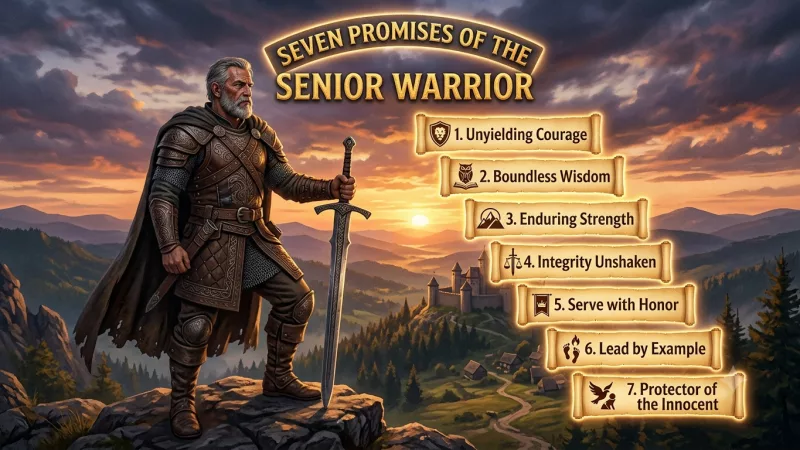
A Simple Senior Warrior Grandfather Oath
I will remain calm when others panic.
I will speak with honesty and restraint.
I will strengthen my body instead of surrendering it.
I will guard my mind from bitterness and self-pity.
I will live simply and honor what matters most.
I will become a source of steadiness for my family.
I will continue learning, growing, and adapting.
I will leave behind wisdom, not chaos.
I will age with discipline and dignity.
An oath becomes powerful only when repeated and practiced.
You can use this principle in practical ways:
- Read your oath every morning.
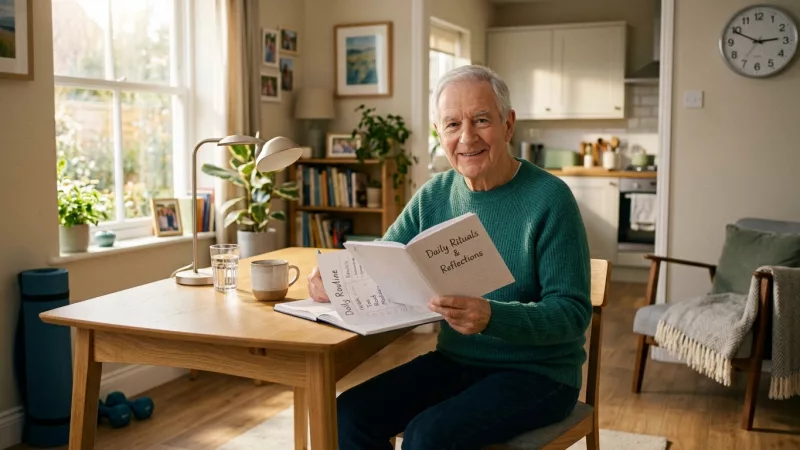
- Keep a printed version near your chair or desk.
- Review it before difficult conversations.
- Use it to evaluate choices:
- “Does this action strengthen or weaken the man I want to become?”
- Rewrite and refine it over time.
- Share parts of it with children or grandchildren through your actions more than speeches.
The real purpose of an oath is not performance.
It is alignment.
It reminds you that even in old age, you are still shaping your character.
A grandfather with a clear code often gives younger generations something rare today:
- emotional stability
- perspective
- restraint
- courage
- consistency
Those qualities become a legacy.
Reflection Questions
- What kind of emotional atmosphere do I want my grandchildren to feel when they are around me?
- Which habits currently weaken the man I want to become?
- What five principles do I want to guide the final decades of my life?
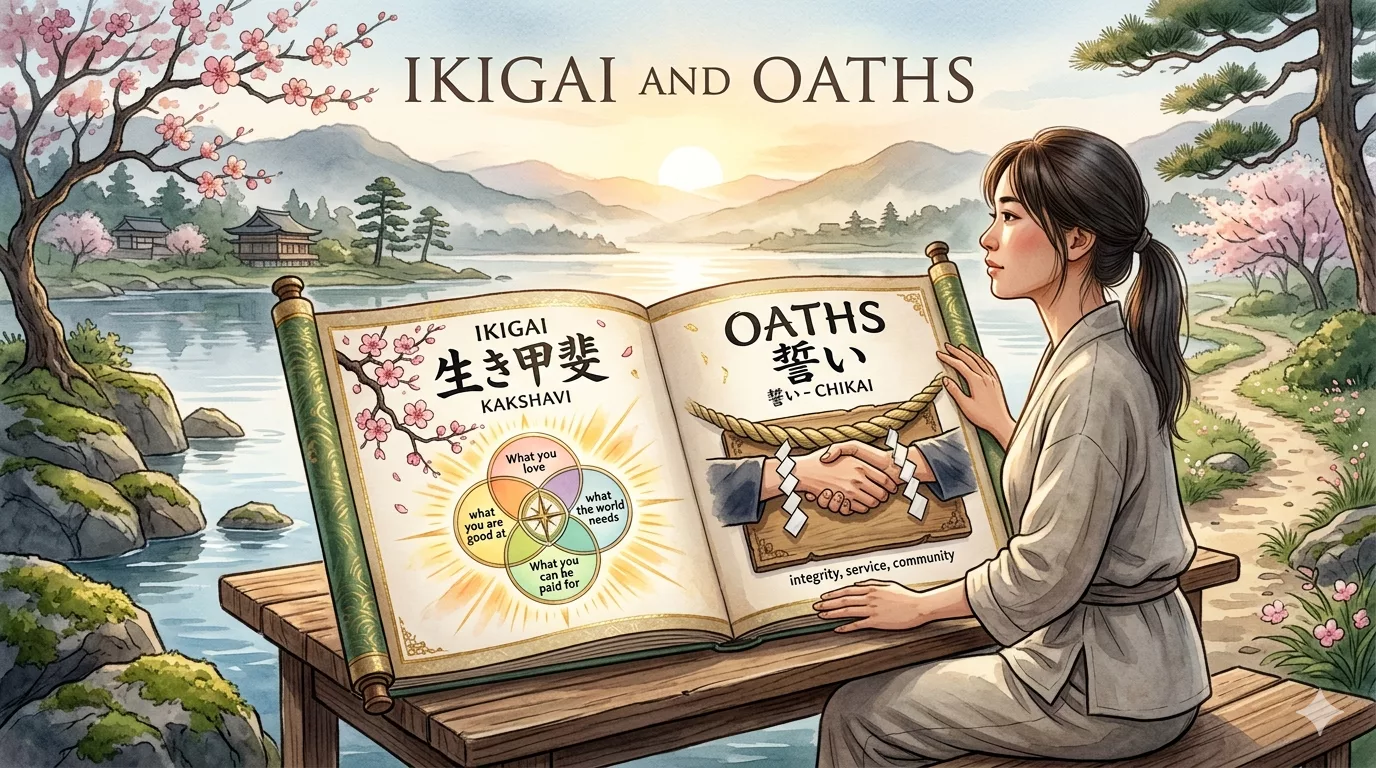
An oath and Ikigai are closely related because both answer the same fundamental question:
“What is the right way for me to live?”
But they approach it from different directions.
- Ikigai helps you discover your reason for living.
- An oath helps you remain faithful to that reason.
Ikigai is about purpose.
An oath is about commitment.
One helps you find meaning.
The other helps you protect it.
For many men after 60, this becomes deeply important because retirement, illness, loss, or aging can create a dangerous feeling of drift. A man may no longer know:
- what he contributes
- who needs him
- what role he serves
- why he should continue striving
Ikigai restores direction by helping a person identify:
- what they value
- what gives them energy
- what helps others
- what kind of life feels meaningful
But purpose alone is fragile.
A man may know what matters and still fail to live it consistently.
That is where the oath enters.
The oath transforms purpose into daily behavior.
For example:
A grandfather’s ikigai might be:
- becoming a calm source of wisdom for younger generations
- rebuilding health after hardship
- mentoring others
- writing, teaching, serving, protecting, creating, or encouraging
But without discipline, distractions and discouragement slowly weaken that purpose.
An oath creates structure around the ikigai.
Example
Ikigai
“I want to help my family live with more wisdom, calmness, and resilience.”
Oath
“I will train my body, govern my emotions, speak with restraint, and continue learning so I can become a steady guide for my family.”
The ikigai provides the destination.
The oath provides the operating code.
This connection also explains why many traditional cultures linked purpose with vows, codes, or disciplines:
- samurai codes
- Stoic practices
- monastic vows
- warrior creeds
- medical oaths
- religious covenants
Purpose without discipline fades.
Discipline without purpose becomes empty.
Together, they create a stable identity.
The Stoic philosopher Epictetus taught that a person should consciously choose the principles that govern their life rather than be ruled by impulse or circumstance.
Likewise, Bruce Lee believed that self-mastery required both clarity of purpose and disciplined practice.
For a senior man, this combination can become powerful:
- Ikigai answers:
“Why should I continue growing?” - The oath answers:
“How will I conduct myself while doing it?”
One gives meaning.
The other gives backbone.
A Senior Warrior Philosopher Version
Possible Ikigai
To become a calm, disciplined elder who helps others live with greater wisdom and courage.
Possible Oath
I will not surrender my mind to bitterness, weakness, or aimlessness.
I will continue becoming useful, disciplined, and emotionally steady.
I will leave strength behind me wherever I go.
That combination creates something rare today:
a man who ages with direction instead of decline alone.
In many ways, this fits naturally within my broader Phoenix72 and “Senior Warrior Philosopher” framework:
- ikigai gives the inner fire
- the oath shapes the character
- daily discipline turns both into a lived reality.