Decline After 60
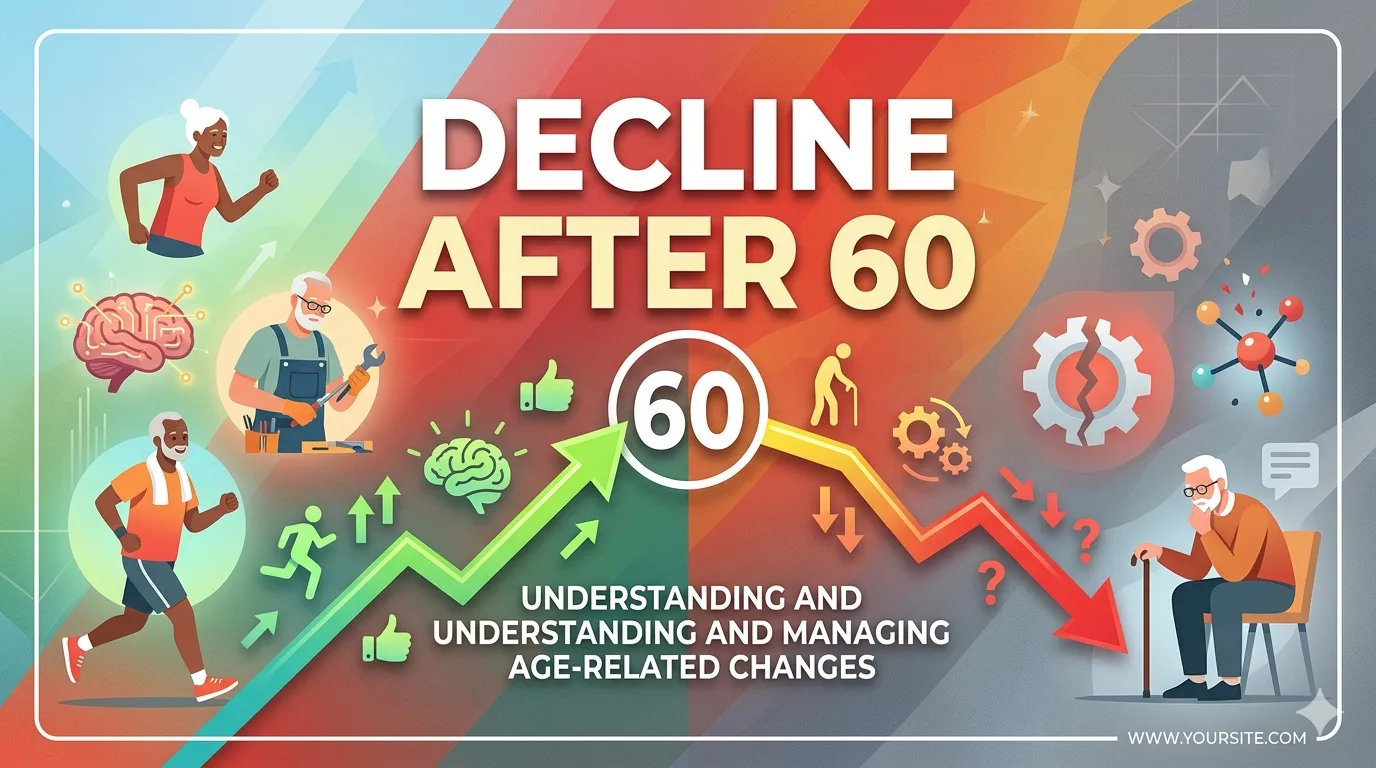
The Myth of Decline After 60
1. Story
The doctor spoke gently, but the message was blunt.
“You need to slow down now.”
Frank sat on the paper-covered exam table, staring at the floor. The room smelled faintly of disinfectant and rubber gloves. On the wall hung a poster of a skeleton lifting weights—one of those motivational medical jokes.
Frank didn’t feel amused.
Three months earlier he had fallen in his kitchen. Nothing dramatic. He had simply turned too quickly, lost his balance, and landed awkwardly against the counter.
Two cracked ribs.
At sixty-eight, the body heals more slowly.
Friends had reacted in predictable ways.
“Be careful now.”
“You’re not young anymore.”
“Take it easy.”
The advice sounded reasonable. Sensible. Responsible.
But something about it bothered him.
For weeks he moved slowly, as instructed. He watched television. He slept longer. He avoided lifting anything heavier than a grocery bag.
And something inside him began to shrink.
It wasn’t just his muscles.
It was something deeper.
One morning he caught his reflection in the bathroom mirror. His shoulders had rounded forward. His posture had softened.
He looked smaller.
Not physically smaller.
Spiritually smaller.
And he realized something troubling.
It wasn’t the injury that was weakening him.
It was the story he had begun to tell himself.
The story sounded like this:
“I’m getting old.”
“I can’t do what I used to.”
“It’s time to slow down.”
At first these thoughts felt harmless.
But gradually they began to shape his behavior.
He walked less.
He lifted less.
He tried less.
The body was following the story.
One afternoon Frank walked past a small park near his apartment. A group of teenagers were practicing basketball.
On the far side of the court, a man was doing push-ups.
Frank noticed him because he moved slowly but deliberately.
His hair was completely white.
Frank guessed he was at least seventy-five.
The man finished his push-ups, stood up, and stretched calmly. No drama. No audience. Just quiet discipline.
Frank watched him for a moment.
Then something unusual happened.
The man looked directly at him and smiled.
Not a proud smile.
A peaceful one.
The kind of smile that says, You already know what you should do.
Frank walked home.
That evening he did something he hadn’t done in months.
He lowered himself to the floor.
Carefully.
Awkwardly.
He attempted a push-up.
It was not graceful.
His arms trembled halfway down. His ribs complained. His breathing felt shallow.
But he finished it.
One push-up.
Then he rested.
Then he tried another.
Two push-ups.
It was not impressive.
But something important had changed.
The story had changed.
Instead of “I am declining,” a new thought appeared.
“I am rebuilding.”
2. Reflection
The greatest danger of aging is not the body’s decline.
It is the mind’s surrender.
The body does change with time. No wise person denies this.
Muscles recover more slowly. Joints become stiffer. Energy must be managed more carefully.
But these realities are not the true cause of decline.
The true cause is something quieter.
It is the moment a person begins to believe that effort no longer matters.
Many people unconsciously accept a cultural script about aging.
It sounds like this:
After sixty, life is about slowing down.
Avoid risk.
Stay comfortable.
Expect less from yourself.
The problem with this script is that it confuses age with weakness.
Age does not create weakness.
Abandoning discipline creates weakness.
There are two kinds of aging.
The first kind is passive.
A person gradually stops challenging themselves. Movement becomes optional. Effort becomes rare. The body slowly adapts to this lack of demand.
The second kind is intentional.
A person understands that strength must now be cultivated with awareness and patience. They train wisely. They rest deliberately. They move daily.
One path leads to decline.
The other leads to transformation.
The Senior Warrior Philosopher chooses the second.
Because the purpose of later life is not comfort.
It is mastery.
Mastery of the body.
Mastery of the mind.
Mastery of one’s attitude toward reality.
3. Historical Wisdom
This insight is not new.
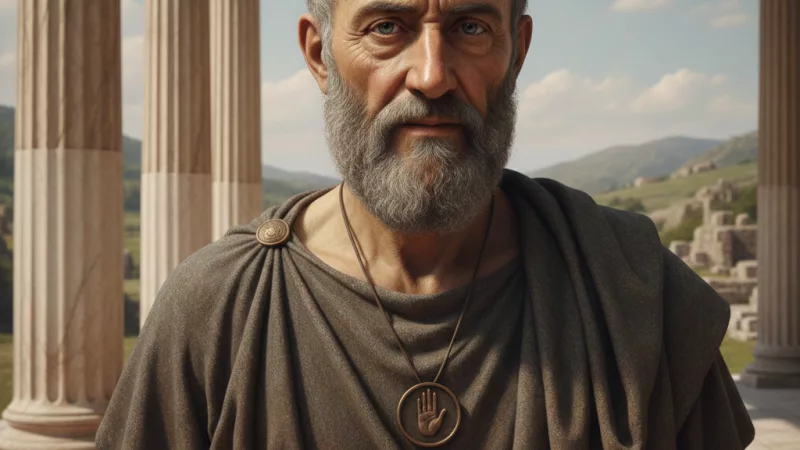
The Stoic philosophers understood it deeply.
The Roman emperor Marcus Aurelius wrote in his private journal:
“Do not let the future trouble you. You will meet it, if you must, with the same weapons of reason which today arm you against the present.”
Marcus Aurelius ruled an empire while enduring illness, war, and personal loss. Yet his writings reveal a simple truth: strength does not come from circumstances.
It comes from self-command.
The philosopher Epictetus, who was born a slave and walked with a crippled leg, taught something even more radical.
“It is not things that disturb us, but our judgments about things.”
In other words, events themselves do not define our lives.
Our interpretation of them does.
A fall in the kitchen can mean:
“I am weak now.”
Or it can mean:
“This is my new starting point.”
Even the martial artist Bruce Lee understood this principle.
Bruce Lee once wrote:
“Absorb what is useful. Reject what is useless. Add what is specifically your own.”
Aging requires exactly this kind of wisdom.
You must absorb what your body now requires.
You must reject what no longer serves you.
And you must add a new form of strength—one that combines patience with discipline.
The Senior Warrior Philosopher does not attempt to return to youth.
He builds something better.
He builds intentional strength.
4. The Lesson for the Reader
If you are reading this chapter, you may already feel the pressure of the cultural story about aging.
Perhaps you have heard phrases like:
“You’re not young anymore.”
“You should take it easy.”
“Don’t overdo it.”
Some of this advice is sensible.
But some of it quietly encourages surrender.
The Senior Warrior Philosopher takes a different approach.
He begins with honesty.
Your body is not the same as it was at twenty.
Good.
It was never meant to be.
The purpose of later life is not speed or brute strength.
It is disciplined resilience.
This begins with small acts.
Walk every day.
Lift something heavy enough to remind your muscles they still exist.
Practice balance.
Eat deliberately.
Sleep with intention.
None of these actions are dramatic.
But they create a powerful message to the body.
“I still expect strength from you.”
The body responds to expectations.
It always has.
This is not about chasing youth.
It is about refusing unnecessary weakness.
A Senior Warrior Philosopher does not ask:
“How old am I?”
He asks:
“What am I training today?”
5. Three Rules of the Senior Warrior
Rule 1: Reject the Story of Decline
Aging is real.
But decline is not automatic.
The stories you tell yourself shape your behavior. Choose a story that demands effort, not surrender.
Rule 2: Train for Strength, Not Comfort
Comfort weakens the body.
Gentle challenge strengthens it.
Move daily. Lift wisely. Maintain balance and coordination.
Strength is a habit.
Rule 3: Begin Again Every Day
The past does not matter.
Yesterday’s weakness does not define today’s effort.
Every morning offers the same opportunity:
Begin again.
6. Closing Reflection
The myth of decline after sixty is powerful.
But it is only a myth.
The truth is quieter.
Later life is not a collapse.
It is a refinement.
The young often rely on energy.
The old must rely on discipline.
And discipline, when practiced calmly and consistently, becomes a form of strength deeper than youth ever possessed.
The Senior Warrior Philosopher understands this.
He does not race against time.
He walks with it.
Every morning he rises, moves his body, steadies his mind, and returns to the simple work of self-mastery.
Not because it is easy.
But because it is worthy.
And in that quiet effort—one push-up at a time—he discovers something surprising.
He is not declining.
He is becoming.