Habits, Routines, and Rituals for Seniors Living Alone
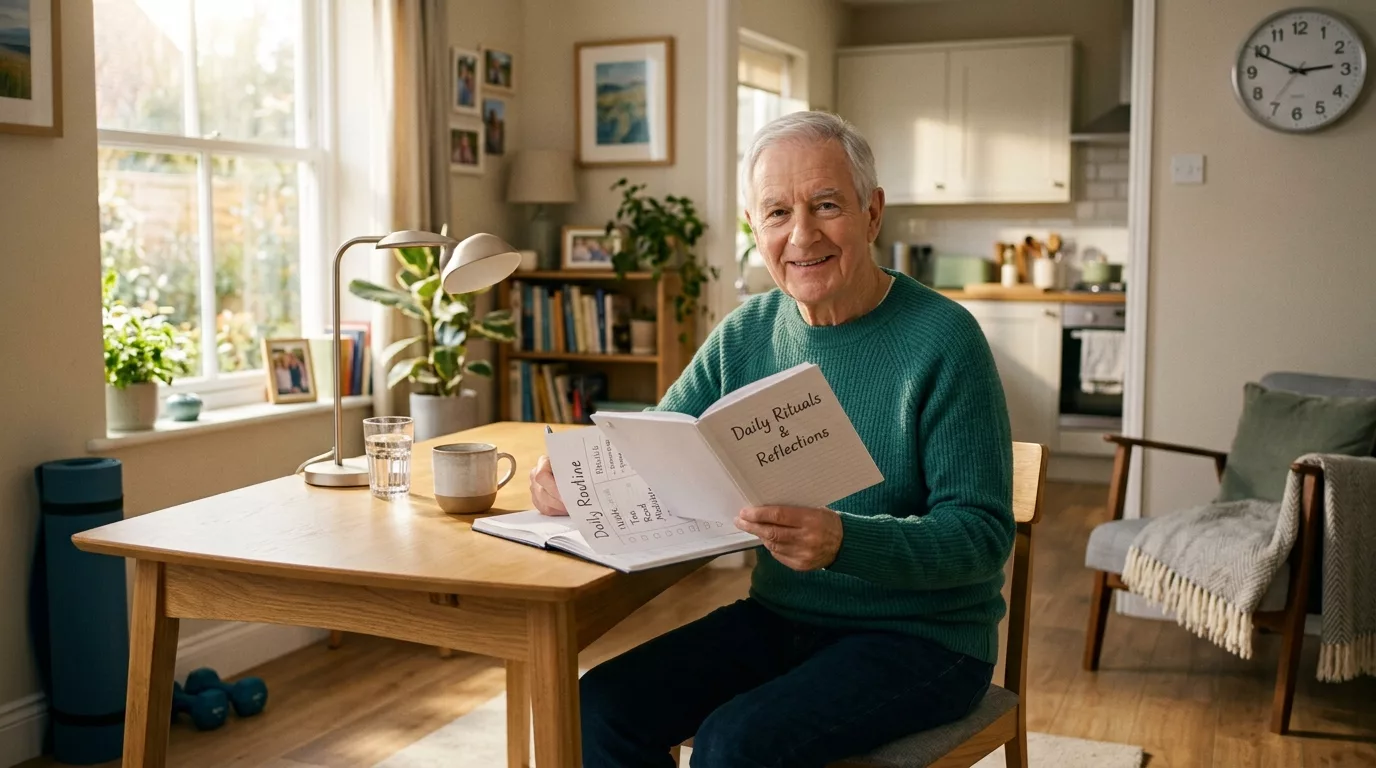
Building a New Life After 60: Habits, Routines, and Rituals for Seniors Living Alone
Growing older does not mean becoming less capable. It does mean that the systems that carried us through earlier life may no longer work as well as they once did.
A career may have ended. Children may have moved away. A spouse may have died or a marriage may have ended. The daily structure that once came from work, family obligations, appointments, and other people can disappear almost overnight.
For a senior living alone, this new freedom can feel peaceful at first. There is no boss, no commute, no one waiting for dinner, and no need to organize the day around another person’s schedule.
But freedom without structure can slowly become drift. Bedtimes become irregular. Meals are chosen for convenience instead of health. Exercise is postponed. Hours disappear into television, news, social media, or random internet browsing. The house becomes harder to manage. Important appointments are forgotten. Days begin to feel interchangeable.
This is not necessarily laziness or a failure of character. It is often a failure of structure.
The answer is not to recreate the pressure of a full-time job or to plan every minute of the day. The answer is to deliberately build a new framework made of habits, routines, and rituals—one suited to living alone, shaped by the realities of an aging body and mind, and strong enough to replace patterns developed over a lifetime.
Aging Requires Adaptation, Not Surrender
Many of us carry habits that were formed decades ago. Some were useful at the time. Skipping breakfast, eating late, working through exhaustion, ignoring pain, keeping everything in our heads, or depending on a spouse to remember appointments may have seemed manageable when we were younger.
Other habits—smoking, eating processed food, sitting too long, overspending, staying up late, or avoiding medical care—may always have been harmful, but youth gave us enough resilience to hide some of the consequences.
An aging body is less forgiving. Muscle is easier to lose and harder to rebuild. Balance may decline. Joints become stiff. Recovery takes longer. Diabetes, high blood pressure, neuropathy, kidney problems, or heart disease may turn yesterday’s minor weakness into today’s serious risk.
- A cluttered floor is no longer merely untidy; it may be a fall hazard.
- Skipping medication is no longer a small oversight.
- Several days without meaningful movement can quickly reduce strength and confidence.
The mind changes too. Most older adults do not develop dementia, but ordinary aging can make attention, recall, and mental switching less dependable. Stress, poor sleep, dehydration, isolation, medication side effects, depression, and uncontrolled health conditions can make these problems worse. Relying on motivation and memory alone becomes an increasingly fragile strategy.
This is why seniors need systems. A good system does not insult your independence. It protects it.
Habits, Routines, and Rituals Are Not the Same
The three words are often used interchangeably, but each plays a different role.
A “habit” is a small behavior repeated so often that it requires little thought. Drinking a glass of water after getting up, placing your keys in the same bowl, taking medication with breakfast, or checking that the stove is off after cooking are habits.
A “routine” is a sequence of actions performed in a familiar order. A morning routine might include opening the curtains, drinking water, checking blood sugar, taking medication, doing gentle movement, getting dressed, and eating breakfast.
The steps support one another and reduce the number of decisions you must make.
A “ritual” is a repeated action given meaning. The behavior may resemble a routine, but it carries emotional, moral, or spiritual importance.
A morning walk can be exercise; it becomes a ritual when it is also a time to practice gratitude, pray, notice the neighborhood, and renew your intention for the day.
Preparing a simple evening meal can become a ritual of self-respect rather than a chore performed only because no one else is there to cook.
Habits make individual actions easier. Routines organize the day. Rituals remind us why the day matters.
Seniors living alone need all three.
Living Alone Changes the Rules
When you live with someone, many safeguards happen naturally. Another person notices that you have not eaten, that you seem unsteady, that the mail is piling up, or that you forgot an appointment. Conversation breaks up long periods of isolation. Shared meals create natural stopping points. Even minor disagreements and compromises keep the mind engaged with another person’s needs.
Living alone removes much of this external feedback.
- No one sees whether you stay in pajamas all day.
- No one knows whether you ate a balanced dinner or cookies over the sink.
- No one automatically checks on you after a fall, a sudden illness, or an unusual period of silence.
That makes self-observation and deliberate contact essential. A senior living alone must become both the person who lives the day and the person who designs the day.
You must create the reminders, boundaries, and checkpoints that another household member might once have supplied.
This does not require a complicated life-management system. In fact, complexity is usually the enemy. A sheet of paper on the refrigerator, a pill organizer, alarms on a phone, a regular call with a friend, and a few reliable daily anchors can provide more protection than an elaborate plan that is abandoned after a week.
Start with Anchors, Not an Ideal Schedule
Many people try to change by drafting a perfect timetable. They assign every hour, announce a complete new life, and expect themselves to follow it beginning Monday. The plan usually collapses as soon as they sleep late, feel sore, receive an unexpected call, or have a medical appointment.
A better approach is to establish a few anchors.
An anchor is an event that happens predictably and can support another behavior. Getting out of bed, making coffee, eating lunch, returning from a walk, taking evening medication, and turning off the television are possible anchors.
Attach one small action to an existing anchor:
– After my feet touch the floor, I will drink water.
– After I start the coffee, I will do five supported squats or sit-to-stands.
– After breakfast, I will take my medication and mark it on the checklist.
– After lunch, I will walk for ten minutes.
– After dinner, I will prepare tomorrow’s clothes and clear the kitchen counter.
– When the evening alarm sounds, I will turn off the news and begin winding down.
The action should be small enough to perform on a difficult day. You can always do more, but your minimum must remain achievable.
Five safe sit-to-stands completed daily will build a stronger foundation than an ambitious hundred-squat plan performed twice and then abandoned. If your long-term goal is one hundred repetitions, build toward it in small sets and adjust for pain, balance, and medical advice.
Build a Morning Routine That Creates the First Victory
The morning is especially important for someone who is retired and living alone because there may be no external reason to begin. Without a deliberate start, the day can remain vague until noon.
A strong morning routine does not need to be long. It should answer five needs: hydration, orientation, medication or health monitoring, movement, and purpose.
Begin by getting up at roughly the same time each day. Open the curtains and let daylight tell the brain that the day has begun. Drink water if that fits your medical guidance. Use the bathroom, attend to any prescribed health checks, and take medication at the proper time. Put on real clothes, even if you have nowhere formal to go. Then perform a safe amount of movement—gentle mobility work, supported squats, a short indoor walk, or a walk outside.
Finally, decide what would make the day worthwhile. Choose one essential task, not ten. Write it where you will see it. A useful morning sentence might be: **Today I will care for my body, complete one important task, and make contact with another human being.**
The goal is not a heroic morning. The goal is a repeatable first victory.
Create Routines for the Weak Points of the Day
Every person has predictable trouble spots. For one senior, it is late-night eating. For another, it is forgetting medication. Someone else may lose entire afternoons online, avoid opening mail, or let dishes accumulate until the kitchen becomes discouraging.
Do not condemn yourself for these patterns. Study them. Ask three questions:
1. When does the problem usually happen?
2. What happens immediately before it?
3. What smaller, healthier action could occupy the same place?
If you snack late while watching television, the solution may include eating a satisfying dinner, closing the kitchen at a set time, brushing your teeth, and keeping trigger foods out of the home.
If you forget medication, pair it with the same meal, use a weekly organizer, set an alarm, and record each dose.
If online browsing consumes the morning, keep the Chromebook closed until after movement, breakfast, and the day’s main task.
Environment often matters more than willpower. Put walking shoes by the door. Keep a sturdy chair where you exercise. Place healthy food at eye level. Remove trip hazards. Charge the phone in the same place. Keep the written routine visible. Make the good action obvious and convenient; make the harmful action less available.
Replace Lifelong Bad Habits Gradually
A lifetime of repetition creates deep pathways. It is unrealistic to expect them to disappear because you made a sincere decision on Sunday night.
Old habits are usually serving a need: comfort, stimulation, relief from boredom, escape from loneliness, or a feeling of control.
Removing the behavior without addressing the need leaves an empty space.
Replacement works better than simple prohibition.
- Replace a sugary evening snack with tea, a planned low-carbohydrate option, or another food appropriate to your health needs.
- Replace endless news consumption with one scheduled news check followed by a walk or a book.
- Replace impulse shopping with a 48-hour waiting rule.
- Replace isolation with a recurring phone call, church gathering, senior-center activity, volunteer shift, or daily greeting exchanged with a neighbor.
Change one major pattern at a time. Trying simultaneously to transform diet, sleep, exercise, finances, housekeeping, and social life creates constant failure signals.
Choose the habit that most threatens your health or independence and work on it until the new behavior becomes familiar.
Expect lapses. A lapse is one event; a relapse is the decision to stop returning. The most important rule is simple: never miss twice when it is reasonably within your control.
If you skip the walk today, take a shorter walk tomorrow. If dinner goes off plan, return to your normal breakfast rather than declaring the week ruined.
Respect the Aging Body
Discipline after 60 should be intelligent, not punishing. The body needs challenge, but it also needs recovery and safety. A useful weekly pattern generally includes walking or other aerobic movement, strength work, balance practice, mobility, adequate protein and nourishment, hydration suited to your medical needs, and consistent sleep.
Progress gradually. Use a counter, chair, or wall for support when necessary. Stop and seek medical guidance for chest pain, faintness, severe shortness of breath, sudden weakness, or new neurological symptoms.
Persistent joint pain is information, not a character test. People with diabetes, neuropathy, a history of stroke, significant kidney or heart disease, or repeated falls should discuss major exercise and dietary changes with their clinician.
An aging body may need a longer warm-up and more recovery, but it still responds to use.
Strength protects the ability to rise from a chair, carry groceries, use public transportation, and recover from a stumble.
Balance training protects mobility.
Walking supports circulation, mood, and contact with the outside world.
The purpose of exercise is not to imitate your younger self. It is to preserve the freedom of your future self.
Support the Mind by Reducing Mental Load
Do not use memory for tasks that can be placed in the environment.
- Maintain one calendar, one medication system, one location for keys and wallet, and one written list for today’s priorities.
- Use phone alarms for time-sensitive actions.
- Prepare for appointments the night before.
- Keep emergency information visible and updated.
Too many choices exhaust attention.
A simple breakfast rotation, regular laundry day, scheduled grocery trip, and standard bedtime remove unnecessary decisions. This is not a dull life; it is a life that saves mental energy for reading, writing, relationships, learning, service, and creativity.
Protect attention from industries designed to capture it.
News, social media, games, and online videos have no natural stopping point. Give them a defined window. Turn off nonessential notifications. Keep screens out of the first part of the morning and the last part of the evening when possible. Boredom is not an emergency. Sometimes it is the quiet space in which intention returns.
Turn Necessary Tasks into Rituals of Self-Respect
Living alone can make ordinary care feel pointless.
- Why set the table for one?
- Why dress well if no one will see you?
- Why keep the room orderly when no guest is coming?
Because you are the person for whom the home is being kept.
Ritual restores dignity to actions that might otherwise feel mechanical.
- Make the bed as a declaration that the day has begun.
- Prepare one meal each day with attention.
- Sit at a table instead of eating over the sink.
- Walk the same route and notice what has changed.
- Pause before taking medication and acknowledge that the act protects your future.
- Close the kitchen each evening, lower the lights, and let the body know that work is ending.
- Ritual can also connect you to gratitude, faith, ancestry, or service.
You might begin the morning with prayer, read a page of philosophy, write three sentences in a journal, remember someone who helped you, or ask, “Whom can I encourage today?” Meaning turns repetition into commitment.
Make Human Contact Part of the Plan
Social connection cannot be left entirely to chance, especially for a person who lives alone and does not drive. Isolation can develop quietly. Several comfortable days at home become several weeks, and the effort required to go out gradually feels larger.
Build contact into the calendar as deliberately as medication or exercise. Aim for small, regular connections rather than waiting for major social events. Greet neighbors. Speak to familiar workers at the grocery store or coffee shop. Call one person. Attend a recurring group. Walk at the same time and place so acquaintances can form naturally. Volunteer for a role that gives people a reason to expect you.
- Create a basic check-in system.
- One trusted person should know how to reach you and what to do if you fail to respond.
- Keep emergency contacts and medical information accessible.
- If appropriate, consider a medical alert device or another method of summoning help.
Planning for emergencies does not mean expecting disaster. It means refusing to let pride turn a manageable event into a crisis.
Use a Minimum-Day Plan
Some days will be disrupted by pain, fatigue, grief, appointments, poor sleep, or bad weather. Instead of abandoning the routine, create a reduced version in advance.
On a minimum day, you might:
– Get dressed.
– Take prescribed medication.
– Eat regular, appropriate meals.
– Complete five minutes of safe movement.
– Clear one small surface.
– Contact one person.
– Prepare for sleep at the usual time.
This short list prevents a hard day from becoming a lost week. It preserves identity: **I am still a man who cares for his health and directs his life, even when I must reduce the load.**
Review the System Once a Week
A routine should serve you, not rule you. Once a week, sit down for fifteen minutes and ask:
– What worked without much effort?
– What did I repeatedly avoid or forget?
– Was the action too difficult, poorly timed, or easy to overlook?
– What affected my sleep, energy, balance, blood sugar, or mood?
– Who did I speak with this week?
– What is the one adjustment that would make next week easier?
Change the design before attacking your character. Move the reminder. Reduce the number of repetitions. Choose a better time. Ask someone for support. Remove an obstacle from the room. The best routine is not the most impressive one; it is the one you can continue.
A Simple Framework for Beginning Again
If your days currently lack structure, begin with six daily anchors:
Wake: Get up at a consistent time, open the curtains, drink water if appropriate, and get dressed.
Move: Perform a safe minimum amount of strength, balance, or walking immediately after a reliable morning cue.
Maintain: Take medication, complete prescribed health checks, eat deliberately, and handle one household task.
Matter: Finish one important task that supports your health, finances, home, creative work, or responsibilities.
Meet: Have at least one meaningful human contact, even if brief.
Close: Reset the kitchen, prepare for morning, reduce screen stimulation, and go to bed at a consistent time.
Practice this framework for two weeks before adding more. Record completion with simple check marks. Do not grade the quality of each action. First establish the rhythm; refinement can follow.
The Goal Is Continued Independence
Habits, routines, and rituals are not attempts to make old age rigid. They are tools for keeping it free. They reduce preventable risk, conserve attention, support health, and keep a person connected to meaning. They help us act before mood gives permission.
The central challenge of later life is not merely accepting that the body and circumstances have changed. It is building a way of living that responds to those changes without giving up authority over the day.
You may live alone, but you do not have to live accidentally. You may carry decades of unhelpful habits, but repetition created them and new repetition can weaken them. Your body may require more care, but caring for it is not surrender. It is the work of preserving independence.
Begin with one anchor. Keep one promise tomorrow morning. Repeat it until it becomes part of the way you live. Then add the next.
A strong later life is rarely built through one dramatic transformation. It is built through ordinary actions, performed in a dependable order, and given a reason worth remembering.