Bruce Lee’s Philosophy
Bruce Lee’s Philosophy
Stormin’
- https://www.lewrockwell.com/2026/02/no_author/embrace-your-inner-knight/
- Consider the elements of a knight’s code once again: (1) Faith, (2) Charity, (3) Justice, (4) Sagacity, (5) Prudence, (6) Temperance, (7) Resolution, (8) Truth, (9) Liberality, (10) Diligence, (11) Hope, and (12) Valor.
- Does it seem remotely possible for humanity to endure if we continue down a path on which hedonistic vice is celebrated and the cultivation of virtue is abandoned?
- My one mission today is to fast until I get my blood sugar under 100.
=====
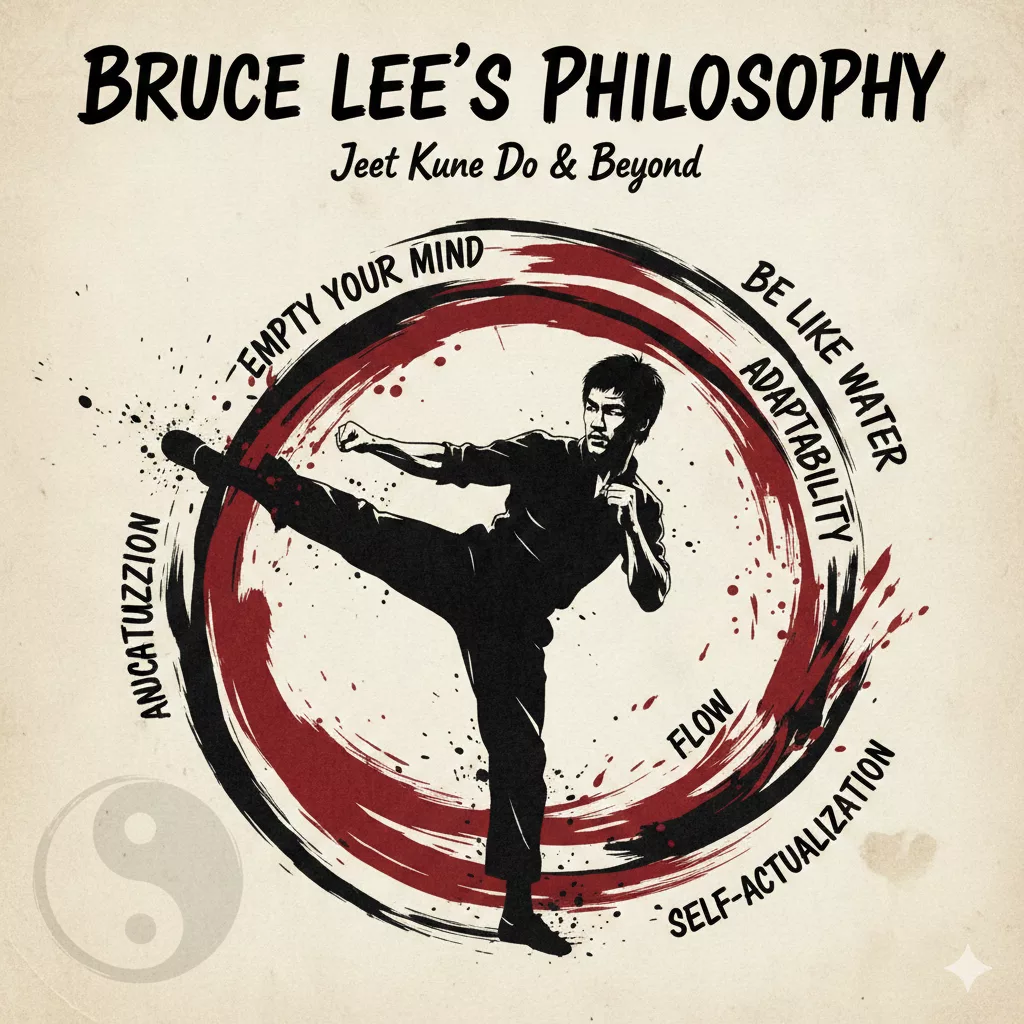
Bruce Lee’s philosophy centers on self-actualization, adaptability, and personal liberation, famously encapsulated by “becoming like water”—formless, flexible, and capable of overcoming any obstacle.
Rooted in Taoism, Zen Buddhism, and Krishnamurti’s teachings, it advocates rejecting rigid dogma to embrace{” “non-formulaic, authentic expression in both life and combat.
Key principles include continuous self-growth, “using no way as way,” and merging mind and body. [1, 2, 3, 4, 5, 6, 7]
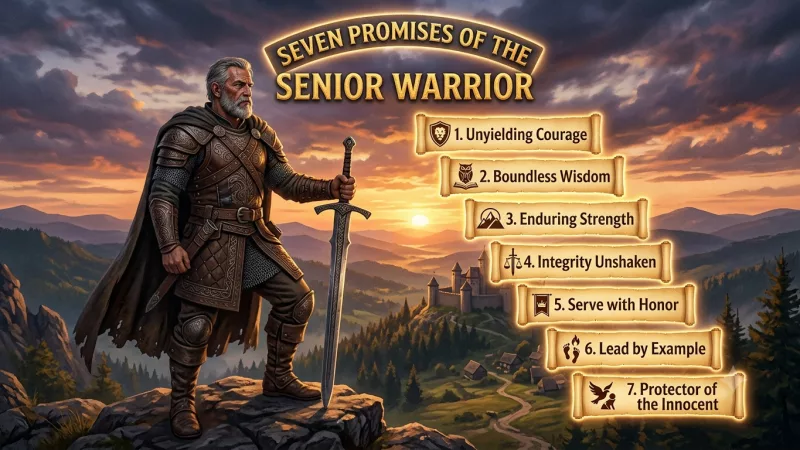
This is even more critical for senior warriors late in life. Time is of the essence.
Core Philosophical Principles:
- Be Like Water (Adaptability): Life requires flexibility to flow around obstacles rather than crashing against them. Water can flow or it can crash, adapting to the shape of its container.
- Self-Actualization and Authenticity: The goal of life is to realize one’s own potential and “express oneself honestly,” rather than imitating others or following established, rigid patterns.
- “Using No Way as Way”: This principle, central to Jeet Kune Do, means transcending rigid styles and systems to find what works for you individually.
- “Absorb What is Useful, Discard What is Useless”: Lee emphasized taking knowledge from all sources but tailoring it to one’s own, unique needs.
- The Unity of Mind and Body: Physical and mental training must be integrated. Rigidity in thinking leads to rigidity in action; fluidity of mind creates fluidity of movement.
- Continuous Growth and No Limits: Limits are temporary plateaus to be surpassed, not permanent boundaries. [1, 2, 3, 4, 5, 6, 7, 8, 9, 10]
Seniors have a great deal of difficulty getting rid of useless items that they have accumulated over a lifetime.
Influence and Core Beliefs:
- Philosophical Roots: His approach was a blend of Taoism (naturalness/flow), Zen Buddhism (direct experience), and Western thinkers like Nietzsche (self-overcoming).
- Anti-Dogma: Lee strongly opposed “traditionalism,” believing that strict adherence to a specific, “static” style (like traditional martial arts forms) makes a person narrow-minded and incapable of seeing the truth.
- Self-Knowledge: All learning is ultimately self-knowledge. He believed that understanding oneself is the foundation for overcoming challenges. [1, 4, 5, 11]
Practical Application:
- Daily Action: He advocated for starting, not just thinking, urging consistent, persistent, and focused action toward goals.
- Actionable Advice: The YouTube video highlights his advice to have less ego, use it as a tool rather than an identity, and live in continuous inquiry. [3, 8, 12]
Bruce Lee’s philosophy is essentially a way of life that encourages individuals to be free, authentic, and in a constant state of evolution. [2, 3, 4, 13]
[3] https://www.youtube.com/shorts/SgSvP-DngKo
[5] http://www.becoming.8m.net/bruce02.htm
[6] https://www.youtube.com/watch?v=FEQiPY2Vvxc
[7] https://www.youtube.com/watch?v=nzQWYHHqvIw
[8] https://www.cbsnews.com/news/meet-bruce-lee-personal-growth-guru/
[9] https://www.youtube.com/watch?v=LiafOrFc3pU
[10] https://www.youtube.com/watch?v=wjx1KqNBjDI
[11] https://en.wikipedia.org/wiki/Bruce_Lee
[12] https://www.themarginalian.org/2026/02/06/bruce-lee-notebook/
Book snapshot & market performance (pre-2021 context)
The Warrior Within: The Philosophies of Bruce Lee (John R. Little; originally published 1996, ~240 pages) positions itself as an “estate-access” compilation/interpretation of Bruce Lee’s philosophical writings, framed for self-mastery and life application, and packaged with a foreword by Linda Lee Cadwell plus photos/memorabilia. (Barnes & Noble)
On reader platforms, it performs like a high-satisfaction niche classic: Goodreads shows an average rating around 4.2/5 with ~1.3–1.4K ratings—strong for an older, category-straddling title (martial arts + self-development + philosophy). (Goodreads)
Reader segments (who it reliably attracts)
- Bruce Lee devotees / collectors who want “authorized” access and legacy material (photos, estate framing, foreword). (Barnes & Noble)
- Martial artists who treat philosophy as training fuel (discipline, adaptability, mindset). (Audible.com)
- Self-improvement readers drawn to the “apply it to your life” promise and bite-sized principles. (Barnes & Noble)
- East–West synthesis seekers (Tao/Zen language + modern personal development framing). (Barnes & Noble)
1) The Strengths (what differentiates it)
- Credibility by access + curation
- The core selling point is that much of Lee’s philosophical material was not broadly available, and Little is positioned as a serious curator with estate access. (Barnes & Noble)
- A “usable” philosophy book, not just admiration
- The text is framed to help readers apply ideas: perspective-taking, yin/yang balance, adaptability under adversity, inner force/spirit. (Barnes & Noble)
- Translates a mythic figure into a reflective teacher
- For many, the surprise is Bruce Lee as a thinker—integrating Tao (“the Way”), simplicity, and flow (“be water”) into daily life. (The Rabbit Hole)
- Packaging that signals “legacy”
- Foreword + memorabilia/photographs reinforce authenticity and emotional connection. (Barnes & Noble)
- Broad category reach
- It cross-sells into martial arts, inspiration, self-development, and philosophy—helpful for long-tail discovery and gifting. (Audible.com)
2) The Weaknesses (where it can be improved)
- Perceived repetition
- A recurring complaint is that core themes/phrases recur without enough fresh expansion—readers may feel they’re circling the same principles. (Amazon UK)
- Occasional “hagiography” risk (not objective enough)
- Some readers want a more critical editorial stance—clearer boundaries between Lee’s original words, Little’s interpretation, and myth-making. (Amazon UK)
- “I wanted more Bruce” problem
- In philosophy compilations, a subset of buyers expect more primary text and less narrator/curator voice. This expectation gap shows up in reader reactions. (Goodreads)
- Conceptual prerequisites
- Readers without background in Tao/Zen framing can find the material slippery—intuitive, but not always operationalized into steps, examples, or modern case studies. (The Rabbit Hole)
- Format/structure limitations of compiled notes
- The “compiled from writings” nature can produce uneven pacing: aphorisms next to commentary, topic shifts, and occasional lack of time/place context for a passage. (This is a structural risk inherent to curated estates.) (Barnes & Noble)
- Audiobook-specific friction (if readers consume that format)
- Audible reviews flag irritation with a narrator performance choice (an “imitation/voice” issue), which can distract from the material. (Audible.com)
3) Why they bought (what they hoped to get—and often did)
- Authenticity + access: “estate material I haven’t seen elsewhere.” (Barnes & Noble)
- A personal philosophy for adversity: adaptability, resilience, and self-mastery framed in Lee’s ethos. (Barnes & Noble)
- Inspiration that feels tougher than generic self-help: martial discipline + inner work, not just positivity. (Audible.com)
- Meaning-making: readers describe “purpose,” “self-discovery,” and worldview shifts (especially in the audio reviews). (Audible.com)
- Collector appeal: photos/memorabilia and foreword add “keepsake” value. (Barnes & Noble)
4) Why they may not buy (or may bounce after purchase)
- They expected a tighter, more original “Bruce Lee in his own words” book and got more editorial framing than they wanted. (Goodreads)
- They dislike repetition or prefer a more linear argument that builds chapter-to-chapter. (Amazon UK)
- They’re not interested in Tao/Zen language (or they want it simplified and made more practical). (The Rabbit Hole)
- They want a more “warts-and-all” treatment instead of a reverent tone. (Amazon UK)
- They’re shopping for martial technique, not philosophy (category mismatch can cause low completion even when ratings are decent). (Audible.com)
If you’re writing a competing self-published book: 7–10 critical elements to win attention (and mistakes to avoid)
- Be explicit about “primary text vs interpretation.”
- Label passages clearly: Bruce Lee excerpt vs editor commentary vs modern application.
- Avoid the “I wanted more Bruce” backlash. (Goodreads)
- Reduce repetition by design (build an arc).
- Keep the classic themes (simplicity, flow, adaptability), but escalate them: Principle → Practice → Pressure-test → Reflection.
- Repetition is the most cited friction point—don’t inherit it. (Amazon UK)
- Make it operational (toolkit > inspiration).
- Add: checklists, micro-drills, journaling prompts, “if/then” scripts for adversity—so the reader feels change not just admiration. (Barnes & Noble)
- Offer modern case studies (non-martial contexts).
- Health setbacks, career reinvention, grief, discipline with food, rebuilding after failure—translate “be water” into real-world decisions. (The Rabbit Hole)
- Be respectfully more objective than the legacy books.
- Don’t “debunk” for clicks—just add balanced framing: where Lee was evolving, where ideas are influenced by other thinkers, what’s metaphor vs method. (Amazon UK)
- Clarify the East–West synthesis with a friendly glossary.
- Define Tao, yin/yang, wu wei, etc. in plain language + one practical example each—lower the entry barrier. (Barnes & Noble)
- Choose a sharper promise than “Bruce Lee’s philosophy.”
- Compete on a specific transformation: e.g., “The Bruce Lee Method for Handling Pressure,” “Discipline Without Rigidity,” or “A 30-Day ‘Be Water’ Reset.”
- Readers already have compilations; they’ll buy a program.
- Differentiate with structure: a “code,” not a compilation.
- Present 7–12 principles, each with: definition, story, drill, failure mode, recovery plan.
- Don’t over-index on memorabilia; over-index on usefulness.
- Legacy packaging is a strength of The Warrior Within; indies win by being more practical, structured, and modern. (Barnes & Noble)
- (If audio is planned) avoid performance gimmicks.
- Audible listeners complain when narration choices distract from meaning—go for clarity and tone discipline. (Audible.com)
If you want, tell me the angle of your competing book (e.g., “Senior Warrior Philosopher,” leadership, recovery after setbacks, or a 30-day program), and I’ll map a market-positioned outline + hook/title package that deliberately sidesteps the repetition/“not enough Bruce” pitfalls while preserving what readers love.